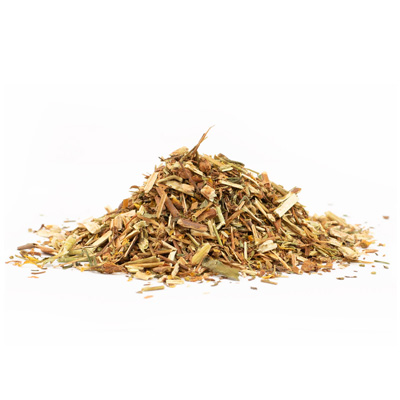
St John's Wort (Hypericum Perforatum) – Herb


This sturdy yellow herb is at home in every corner of Europe. We've known it since the ancient times, so it's no wonder it has acquired a number of folk names in a number of languages. St John's wort is one of the most common herbs in folk healing and has been around for thousands of years.
Shipping methods
| Nizozemská pošta HD - zásilkovna | Delivered by 22. 10. | 1,00 € |
|---|---|---|
 DHL DHL |
Delivered by 22. 10. | 4,90 € |


Ingredients
100 % Perforate St John's-wortBrew & Taste
St. John's wort infusion is a light orange color and has an intense herbal aroma. After the first sip, you'll notice a pleasant sweetness, shortly followed by a mild astringency and bitterness. St. John's wort decoction can be sweetened with a spoonful of honey.
Origins
St. John’s wort (Hypericum perforatum) is a very distinctive herb that's easy to spot in the wild. It typically grows to a height of 50-70 cm, has a sturdy, slightly woody stem, and small, elliptical leaves that seem to have spots when held up to the light – these are actually tiny oil glands. However, it's the bright yellow flowers that are most likely to catch your attention. When rubbed, they leave a red stain on your fingers.
It grows throughout most of Europe, but you can also find it in parts of Asia and North Africa. It prefers sunny and drier habitats – the edges of meadows, field borders, forest paths, or pastures. Sufficient light is key to the production of the active compounds that make St. John’s wort so highly valued.
The herb should be harvested at the peak of flowering, most often during July and August. During this period, it contains the highest concentration of bioactive compounds. Drying is done gently in the shade so that the herb retains not only its color but also its potency.
And why has St. John’s wort maintained its place in herbal medicine for centuries? Its effects are broad and complex. It supports mental balance, helps with stress and tension, and contributes to better sleep and overall relaxation. At the same time, it's also used to support digestion, the respiratory system, and complexion. It is no coincidence that it has been associated with purification since ancient times – not only mental but also physical.
Its properties are primarily due to a rich spectrum of active compounds such as:
- hypericin and pseudohypericin,
- hyperforin,
- flavonoids (rutin, quercetin),
- tannins,
- essential oils,
- phenolic acids.
Benefits of ingredients:

Herb packaging preview
We pack our herbs in a strong, zip-lock aluminum packet which allows you to easily re-seal its contents. Thanks to the hermetic seal, the herbs are protected against humidity, light and foreign odors, all of which could noticeably affect the quality of the brew and the herb itself.
Preparation
 100 °C
|
 15 minutes
|
 1 to 2 teaspoons for 150 ml
|
Instructions for preparation
- Pour 200ml of boiled water (100°C) per 1 teaspoon of the herb.
- Covered, let steep for 15 minutes, then remove the strainer.
- 1 alligned teaspoon is equivalent of 1000mg.
- Do not exceed recommended daily daily dosage of 900mg.


Are you looking for inspiration? Other customers have bought this:
Nettle Leaves (Urtica Dioica) – Herb
Chamomile Blooms (Matricaria Chamomilla) – Herb