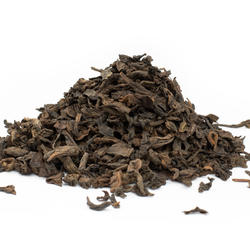
Lapacho – Herb


The South American Natives call it "Tree of the Gods". Botanists know it as Tabebuia impetiginosa and nature admirers as an old friend full of joy and pleasure. Commonly known as Lapacho, this tree has been revered for millennia, not only by phytotherapy enthusiasts but also by builders. The former are interested in its bark, while the latter appreciate its remarkably durable wood. However, all admire it for its stunning crown of pink-purple flowers.
Shipping methods
| Nizozemská pošta HD - zásilkovna | Delivered by 23. 11. | 1,00 € |
|---|---|---|
 DHL |
Delivered by 23. 11. | 4,90 € |


Ingredients
100 % Lapacho Matto GrossoBrew & Taste
The bark of the Lapacho tree must be boiled for 5 minutes and then brewed for 20 minutes. The resulting infusion is copper-colored. The aroma is reminiscent of oak and vanilla with a lemon tail.
Origins

Not familiar with the Lapacho yet? That is too bad, because once you learn more about this amazing plant, you'll know you need it. Just like people in Central and South America and everywhere else in the world. They used the inner bark whenever they faced any difficulties.
The Latin name Tabebuia first appeared in the literature in 1803 when it was used by António Bernardino Gomes, a Portuguese physician, scientist, chemist, botanist, and the member of the Royal Academy of Sciences in Lisbon, a father of vaccination and the first person to propose a treatment for malaria. In addition, his discoveries have made him the patron saint of dermatology in Portugal. He derived his family name from the language of the Tupi tribe, who call the tree ''tacyba bebuya'', meaning ''ant wood''. This is because when the tree dies, its wood becomes the home for ant colonies.
Minor confusion arose with the placement of individual species under this genus, but most of the misunderstanding was cleared up in 1915 by Lord Nathaniel Britton. The most recent species inventory to date was made by Alwyn H. Gentry and published in 1992, including 99 species and one hybrid. However, we are particularly interested in one of its species, Lapacho or Tabebuia impetiginosa. Lapacho has been known to Europeans since the time of the Vikings, who traded it for valuables from the old continent on their travels. An evergreen tree with striking red and purple flowers which grows in the forests of Argentina, Paraguay, and Brazil. It reaches up to 15-20m and can live up to 700 years. Its other typical traits are its smooth bark and carnivorous nature – its flowers ''feed'' on insects. The wood is very durable and hard, often used in construction and for making everyday items, including bows.
The inner bark of Lapacho is rich in lapachol and beta-lapachol. It is a phenolic compound, chemically a derivative of vitamin K. Flavonoids, quinones, saponins, and other substances are also present. These are what the traditional Amazonian tribes relied on to soothe pain, heal wounds, and calm the mind. The tree's inner bark is used to make a tincture for external use. It can be obtained via a careful extraction that does not harm the tree in any way.
After the bark is harvested, it is stored in a dark and dry room, cleaned of leaves and twig debris and dried by airflow. Samples are taken for chemical analysis before the Lapacho is packed in unique jute bags and given a batch number.
Lapacho is also known by its Portuguese name Pau D'Arco or Taheebo and Ipe Roxo.
Benefits of ingredients:


Herb packaging preview
We pack our herbs in a strong, zip-lock aluminum packet which allows you to easily re-seal its contents. Thanks to the hermetic seal, the herbs are protected against humidity, light and foreign odors, all of which could noticeably affect the quality of the brew and the herb itself.
Instructions for preparation
Boil lapacho for 5 minutes and let steep for at least 20.
Lapacho is handled according to the foodstuffs standards, however it is not recommended for consumption. We provide lapacho for external use only.


Are you looking for inspiration? Other customers have bought this:
Rooibos
Organic Honeybush