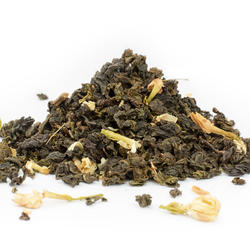
China Osmanthus Oolong


China Osmanthus is a truly remarkable tea. This oolong hails from the traditional tea-growing region of Fujian province and is aptly named Osmanthus due to its distinctive fragrance that resembles osmanthus flowers. We have infused this unique oolong with a hint of peach aroma, which imparts a sweet, fruity taste to the tea. The resulting is smooth, floral, jasmine-like, and delicate. We highly recommend multiple infusions, each offering a slightly different sensory experience.
Shipping methods
| Nizozemská pošta HD - zásilkovna | Delivered by 22. 10. | 1,00 € |
|---|---|---|
 DHL DHL |
Delivered by 22. 10. | 4,90 € |


Ingredients
97 % Oolong Osmanthus, 3 % Devilwood (Osmanthus) flower, Natural aromaBrew & Taste
This oolong is slightly fermented. Its flavor is pure, softly floral, and sweet, with a hint of peach at the end. Its freshness is almost absent. The infusion is pale yellow, with an aroma reminiscent of Osmanthus flowers.
We recommend making multiple infusions.
Origins

Osmanthus is one of the most popular Chinese oolongs. Its homeland is the famous tea gardens of Fujian province, located near the city of Anxi. The area is predominantly mountainous, which is reflected not only in the tea's attributes but also in its name. Huanggang is the name of the highest point in the province (2,157m).
China Oolong Osmanthus is fermented between 20-40%. It is classified as a Dan Cong oolong. They are made from ancient tree-like tea plants, some of which are said to date back to the Sung Dynasty.
The processing of the tea leaves is complex: Harvesting must be done carefully, and only takes place during sunny weather. The leaves are spread in thin layers, and they wilt in the sun where they need to be turned several times. The workers bring them into the shade to cool, then sort and ferment them at night. Even this is not without their intervention, as they shake the tea every hour. After 8 hours, they heat it in a metal cauldron, squeeze it into its final shape, heat it again, and finally dry it in bamboo baskets.
Osmanthus is a shrub from the Olive family and has stiff, dark green leaves, glossy and toothed. Native to Japan and China, in Europe it can be found in southern France and Italy. The tiny, white, and pleasantly sweet-smelling flowers appear in autumn. It can be grown in our latitudes, which many gardeners are happy to do.
Benefits of ingredients:


Tea packaging preview
We pack our teas in a strong, zip-lock aluminum packet which allows you to easily re-seal its contents. This container protects the quality of the tea against humidity, light or foreign odors, all of which could noticeably affect the quality of the brew.
Preparation
 80-90 °C
|
 5 minutes
|
 1 teaspoon for 150-200 ml
|
Instructions for preparation
Pour 150-200ml of boiled water (80-90°C) per 1 teaspoon of tea.
When brewing in a teapot add 1 extra teaspoon.
Covered, let steep for 5 minutes, then remove the strainer.


Are you looking for inspiration? Other customers have bought this:
Tie Guan Yin Iron Goddess of Mercy – Oolong Tea
Milk Oolong