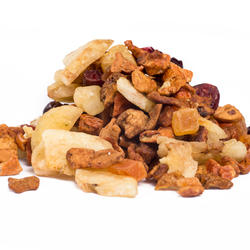
Tasty Apple – Fruit Infusion


Apple of Eden, apple of discord, the golden apple, Newton's apple... What comes to your mind when you say apple? Perhaps the juicy, sweet and popular fruit of the noble apple tree. Perhaps a daily dose of vitamins and minerals. Or Grandma's apple pie? When you taste this tea, you'll associate the pleasant smell of apples with this delicious drink. Drink it hot or iced, it's always refreshing.
Shipping methods
| Nizozemská pošta HD - zásilkovna | Delivered by 22. 10. | 1,00 € |
|---|---|---|
 DHL DHL |
Delivered by 22. 10. | 4,90 € |


Ingredients
Apple chunks, Aroma, Malic acidBrew & Taste
Tasty Apple fruit tea gives a slightly yellowish infusion with a pleasant aroma and taste. It can be described as both sweet and pleasantly sour.
Origin of the tea
Where are apples from? From apple trees. Every central European knows the deciduous trees with their white and pink blossoms. But they're found pretty much all over the temperate zone. Botanists classify the apple tree (Malus) in the Rosaceae family, distinguishing around 35 species and 7,500 cultivars. They are long-lived plants, commonly living about to 60-80 years and growing to 15m. The fruit of the apple tree is, of course, the apple: a fleshy little fruit that ripens from August to September.
Apple trees and apples have played an irreplaceable role throughout history. Just think of the first sin, the outbreak of the Trojan War or, much later, Newton's discovery of the law of gravity. There are many superstitions and legends associated with apples. Their cultivation in Ancient Greece is mentioned by Theophrastus (c. 287BC). The Romans already used apple trees in ancient times, and the popular trees spread throughout Europe. The greatest expansion of apple tree cultivation in Europe dates back to the reign of Charlemagne, who in 812 even ordered them to be cultivated in the imperial gardens.
Apples are one of the most cultivated fruits in central Europe, but the biggest apple exporters are China, Chile, Italy, France and the USA.
Apples are excellent for their vitamin C and antioxidants. They are rich in potassium, phosphorus, sodium and calcium. They can be eaten raw, dried, used for desserts, preserved, juiced or made into spirits.
Benefits of ingredients:


Tea packaging preview
We pack our teas in a strong, zip-lock aluminum packet which allows you to easily re-seal its contents. This container protects the quality of the tea against humidity, light or foreign odors, all of which could noticeably affect the quality of the brew.
Preparation
 100 °C
|
 8-10 minutes
|
 1 to 2 teaspoons for 200 ml
|
Instructions for preparation
Pour 200ml of boiled water (100°C) per 1-2 teaspoons of tea.
Covered, let steep for 8-10 minutes, then remove the strainer.
Serve several times a day.


| Energy value: | 13 kJ / 3 kcal |
| Fats: | 0.1 g |
| of which saturated: | 0.1 g |
| Carbohydrates: | 0.7 g |
| of which sugars: | 0.3 g |
| Proteins: | 0.1 g |
| Salt: | 0.01 g |
Are you looking for inspiration? Other customers have bought this:
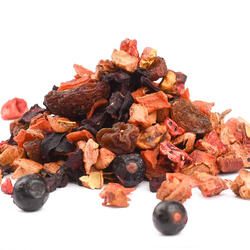
Child's Dream – Fruit Infusion
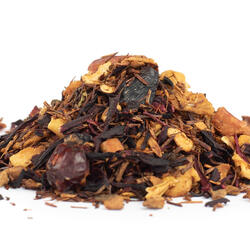
Cinnamon Plum – Fruit Tea