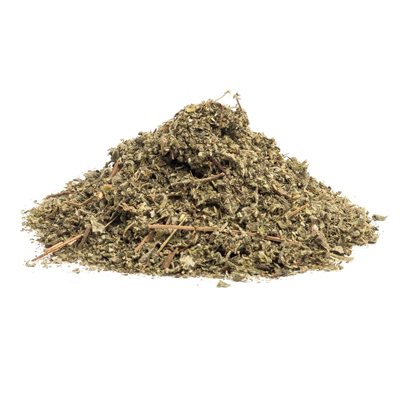
Minthostachys Setosa - Herb


The South American herb Muña Muña is growing in popularity. Regarded as one of Peru's treasures, the Native Americans use this highly valued herb not only for protecting their crops from pests but also for the invigorating drink it makes. You can savor this refreshing tea hot or cold.
Shipping methods
| Nizozemská pošta HD - zásilkovna | Delivered by 22. 10. | 1,00 € |
|---|---|---|
 DHL DHL |
Delivered by 22. 10. | 4,90 € |


Ingredients
100 % MUŇA MUŇABrew & Taste
Minthostachys setosa infusion is delicious, mellow, and cooling. It's a light greenish-yellow color and has a refreshing aroma. You can flavor it with lemon juice and enjoy it either hot or cold. It's often recommended in combination with another one of the Peruvian natural treasures – Vilcacora.
Origins
Minthostachys setosa is one of the aromatic mountain herbs that established their reputation long before they came to Europe. In the traditional Andean environment, it's considered a plant of extraordinary importance not only as part of everyday life, but also as a protective element in agriculture. Its strong aroma naturally repels pests, which is why locals plant it near their fields, especially around potato crops.
The natural habitat of this herb is the high-altitude regions of South America. It's most commonly found at elevations between 2,700 and 3,400 meters, in the harsh climatic conditions – specifically, significant temperature differences between day and night, searing sunlight, and nutrient-poor soil. These precise factors give the plant its characteristic strength and aromatic qualities. Minthostachys setosa grows in the Andes, stretching from Venezuela through Colombia, Peru, and Bolivia to the northern regions of Argentina. However, its distribution is rather localized, making it a valuable and relatively rare raw material.
At first glance, it may resemble an oregano or mint plant. It grows up to two meters tall, has a stem with fine hairs and small, oval leaves. The content of the latter is responsible for the plant’s characteristic menthol scent. For further processing, the above-ground part of the plant is harvested and gently dried to preserve as many active ingredients as possible.
Another interesting fact is the wide range of folk names that Minthostachys setosa has been given – in Ecuador, it's known as Tipo or Poleo, in Peru as Chancua, in Bolivia as Muna, and in Argentina as Peperina. But no matter what you call it, it'll always be a plant that holds a firm place in both traditional Andean culture and modern phytotherapy. We're just rediscovering its importance for modern society. Scientists and growers are seeking ways to protect it in its natural habitat while also enabling its sustainable cultivation to the meet growing global demand.
Minthostachys setosa is valued not only for its aroma but also for its content of bioactive compounds, which include, in particular:
- essential oils (e.g., pulegone, menthone, limonene),
- flavonoids,
- phenolic compounds,
- tannins,
- terpenes.
Pour 1000ml of boiled water (80°C) per 5g of herb.
Steep for 5-10 minutes, then strain.
Recommended daily dosage for adults is 300ml 2-3 times a day. For children 3 years and older, do not exceed 300ml once a day.
Benefits of ingredients:

Tea packaging preview
We pack our teas in a strong, zip-lock aluminum packet which allows you to easily re-seal its contents. This container protects the quality of the tea against humidity, light or foreign odors, all of which could noticeably affect the quality of the brew.
Preparation
 80 °C
80 °C
|
 5-10 minutes
|
 5g for 1000 ml
|
Instructions for preparation
Pour 1000ml of boiled water (80°C) per 5g of herb.
Steep for 5-10 minutes, then strain.
Recommended daily dosage for adults is 300ml 2-3 times a day. For children 3 years and older, do not exceed 300ml once a day.


Are you looking for inspiration? Other customers have bought this:
Manuhan – Ayurvedic Herbal Tea
Assam TGFOP1 Second Flush Monipur – Black Tea