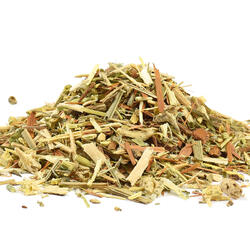
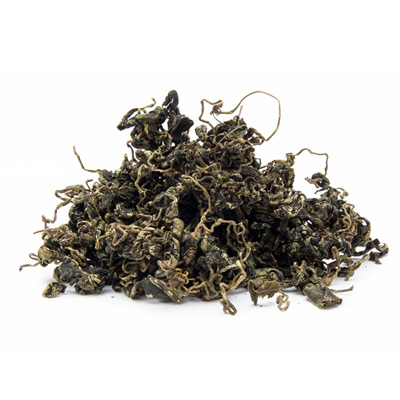
Jiaogulan – Loose Leaf


Humanity has known Jiaogulan for at least 600 years. And we’ve nicknamed it The Herb of Immortality. Botanists know it as Gynostemma pentaphyllum, and in China, they’ve found out that communities that drink it regularly have the most individuals over 100 years in the world. According to research, Jiaogulan helps keep healthy blood sugar levels and supports kidney function and immunity. You can have it every day or simply indulge in an herbal ritual from time to time.
Shipping methods
| Nizozemská pošta HD - zásilkovna | 1,00 € | |
|---|---|---|
 DHL DHL |
4,90 € |


Ingredients
100 % Jiaogulan - herb of immortalityBrew & Taste
Jiaogulan infusion is light yellowish green with a pure, airy, and refreshing impression. The aroma is reminiscent of freshly ground leaves, slightly grassy, with a subtle “green” spark. The taste is natural, mild, and slightly sweet, without astringency; the finish carries a slight natural herbal note. This mild flavor is the very reason Jiaogulan is often popular even among people who don’t usually like herbal infusions.
Origins
Jiaogulan refers to the leaves of the climbing vine by the Latin name of Gynostemma pentaphyllum, which botanists classify in the order Cucurbitales and the family Cucurbitaceae – the same ""family"" as cucumbers, pumpkins, and melons. In nature, it grows as a vine that can attach itself to other plant life or structures using tendrils; this is why we often see it climbing over bushes and low vegetation in the field. A typical distinguishing feature is its palmate leaves, most often consisting of five smaller leaves with finely serrated edges. The plant is dioecious, which in practice means that there are both male and female plants. So, if you’re interested in propagating Jiaogulan, you’ll need both parts. The fruit is also interesting, reminiscent of a small, dark pumpkin.
Jiaogulan is native to southern China, but it can also be found across South and East Asia, with its territory extending as far as New Guinea. In China, it occurs naturally in forests, shrubbery, and along mountain slopes, typically at altitudes of 300 to 3,200 meters above sea level. This is one of the reasons why the origin of high-quality Jiaogulan is so important. Altitude, temperature fluctuations, light intensity, and soil quality have a significant impact on the aroma and content of valuable substances.
The infusion is made mainly from leaves and petioles (with minimum stems), which are gently dried after harvesting. And because it is pure dried plant material without flavoring, there’s a simple must-do during the handling: since Jiaogulan easily absorbs foreign odors, it needs a dry, dark, and well-sealed storage.
In terms of its constituent substances, Jiaogulan is particularly known for being rich in saponins (gypenosides) – compounds comparable to those found in ginseng (ginsenosides) – as well as sterols and triterpenols; it is precisely these components that have earned the herb its reputation as an effective herbal tonic.
Let's add some proven health effects:
- Normal blood lipid levels,
- normal blood sugar levels,
- cardiovascular system support,
- normal homocysteine levels,
- normal blood circulation and pressure,
- normal liver function,
- gut pH balance,
- natural defenses – immune system,
- antioxidant.
Benefits of ingredients:

Tea packaging preview
We pack our teas in a strong, zip-lock aluminum packet which allows you to easily re-seal its contents. This container protects the quality of the tea against humidity, light or foreign odors, all of which could noticeably affect the quality of the brew.
Preparation
 90 °C
90 °C
|
 3-5 minutes
|
 1 teaspoon for 250 ml
|
Instructions for preparation
- Pour 250ml of boiled water (90°C) per 1 teaspoon of Jiaogulan.
- When brewing in a teapot add 1 extra teaspoon.
- Covered, let steep for 3-5 minutes, then remove the strainer.


Are you looking for inspiration? Other customers have bought this:
Manuhan – Ayurvedic Herbal Tea
Bright Mind – Herbal Infusion