Why our products?
- Free shipping on orders over 49 €
- Satisfied customers
- Delivery date is specified within the product description
Benefits of yarrow
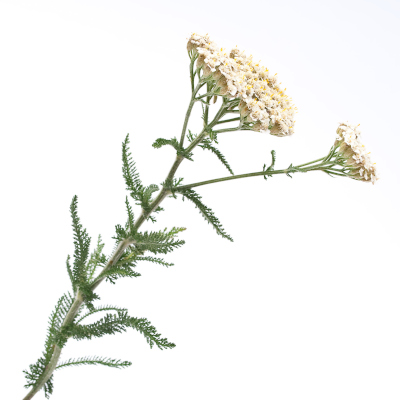
Achillea millefolium is the Latin name that perfectly describes this plant. Millefolium means "made of a thousand flowers". Achillea then refers to one of the most famous Greek warriors who used a tincture of yarrow to strengthen his and his soldiers' invulnerability.
A small feather and a squirrel's tail. These are the names of a hardy medium-sized herb. In Chinese culture, it is considered a symbol of good luck, and in British culture, its leaves were used to obtain the gift of clairvoyance. In short, there is a great deal of legends and interest associated with yarrow.
The first references to the health benefits of yarrow come from records describing the Trojan War around 1200 B.C. In the Middle Ages, it was used along with other ingredients to flavour beer, and it has always been popular with people for its garden benefits. Yarrow can supply nutrients to the soil and acts as an insecticide against unwanted insects. It is found throughout the temperate zone.
The herb is used in cosmetics and pharmaceuticals, but folk medicine has made a significant contribution to its establishment in the kitchen. A bitter liqueur is prepared from the leaves and flowers. Most often, yarrow can be found as a dried component of herbal mixtures.
Yarrow should not be used for long periods, as it can cause headaches and nervous disorders if taken in larger doses than recommended due to its thujone content. Yarrow is not suitable for young children and pregnant or lactating women. It may cause an allergic skin reaction in sensitive persons.
Approved health effects:
- Normal urinary tract function - kidneys
- Normal digestion
- Normal respiratory system function
- Normal function of the vascular system
- Fat metabolism - blood cholesterol