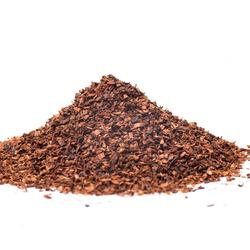
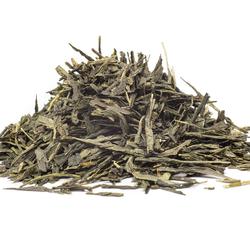
Georgian Gold Green Tea – Tea Blend


Everyone knows that white and green go together! Two Georgian teas in this unique Gold Green Tea bring a sweet, warm and distinctly grapefruit taste. The drink is pleasantly refreshing, perfect no matter the time of day. Try tea from gardens that are slowly returning to their roots. Georgia is experiencing a major tea revival and is making sure that it is once again supplying the world with top quality harvests and interesting flavors.
Shipping methods
| Nizozemská pošta HD - zásilkovna | Delivered by 9. 10. | 1,00 € |
|---|---|---|
 DHL DHL |
Delivered by 9. 10. | 4,90 € |


Ingredients
Georgian white tea, Georgian green teaBrew & Taste
Georgian Gold Green Tea is a perfect combination of white and green Georgian tea leaves. The resulting flavor is therefore an interplay of sweet, juicy grapefruit, delicate herbs and a certain warmth that you notice just moments after drinking. The drink smells of flowers and fruit, and the infusion is light yellow to maroon in color.
Origins

Georgia is taking the spotlight again when it comes to tea. Originally an important producer of high-quality tea, especially for the USSR, it has faced many problems since its collapse. The collapse of the tea industry was one of them. The former 4th largest tea grower in the world has been returning to best practices and methods in recent years, with many Georgian farmers gaining experience in Fujian, China, for example. The desire to return Georgia to a tea superpower status is strong. And it doable.
The proof is Georgian Gold Green Tea, a blend of white and green tea from the Guria region in the west of the country. It is an area with a wonderful history and beautiful nature, with mineral springs, misty forests, alpine meadows, but also sandy beaches. It lies on the Black Sea coast, one part of it is situated in the lowlands, the other on the northern slopes of the Meskheti Mountains. The coastal areas are characterized by a humid, subtropical climate, mild and hot summers and mild winters. The hilly section is influenced by warm air from the sea and cool mountain air. A significant part of the region is occupied by the Kolkheti National Park.
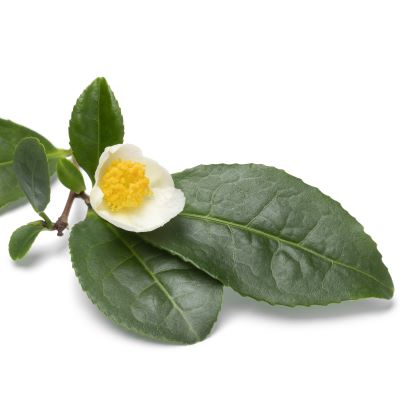
It is precisely in such conditions – on the border between the mountains and the plains – that the tea trees of Camellia sinensis Kolkheti grow. The flavor of the tea produced from their leaves is due to the specific natural conditions and also to the unique processing method. The tea is harvested by workers on 25 hectares of formerly abandoned and now restored plantations. They pluck the leaves by hand, and only during specific weather conditions, when the humidity, temperature and time of day are ideal for harvesting.
The leaves collected in this way are left to wilt briefly, exposed to hot air and shaped. Depending on whether the resulting tea is to be white or green, they leave the harvest to ferment. Finally, they dry the tea slowly and for a long time.
For the sake of completeness, we'll add that tea trees grow in Georgia's Guria shaded by trees that have earned the nickname empress trees. They're called Paulownia tomentosa and are native to south-east China. They have broad crowns, grow to 20m and are decorated with large, bell-like flowers. Paulownias provide a pleasant microclimate for tea trees, protecting them from wind and direct sunlight.
Benefits of ingredients:


Tea packaging preview
We pack our teas in a strong, zip-lock aluminum packet which allows you to easily re-seal its contents. This container protects the quality of the tea against humidity, light or foreign odors, all of which could noticeably affect the quality of the brew.
Preparation
 80 °C
80 °C
|
 3-5 minutes
|
 1 teaspoon for 150-200 ml
|
Instructions for preparation
Pour 150-200ml of boiled water (80°C) per 1 teaspoon of tea.
When brewing in a teapot add 1 extra teaspoon.
Covered, let steep for 3-5 minutes, then remove the strainer.


Are you looking for inspiration? Other customers have bought this:
Lapacho – Herb