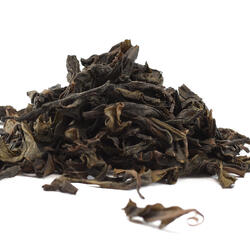
China Tie Luo Han Iron Arhat – Oolong


Have you ever had tea with a ‘rock charm’? If not, now’s your chance to indulge in the most prestigious oolong from the Wuyi mountains, combining the power of minerals with silky softness. This medium-oxidized tea offers a smooth, velvety beverage with a mineral undertaste and hints of roasting that’s typical for ‘rock teas’. If you’re interested in a tea that’s not superficial, unfolds slowly, and requires focus, Iron Arhat is the perfect pick.
Shipping methods
| Nizozemská pošta HD - zásilkovna | Delivered by 15. 10. | 1,00 € |
|---|---|---|
 DHL DHL |
Delivered by 15. 10. | 4,90 € |


Ingredients
100 % China Tie Luo Han oolongBrew & Taste
After brewing, Iron Arhat tea leaves slowly unfurl and release their aroma with slight hints of roasting mixed with foggy rocks. The first sip is surprisingly smooth, velvety, without grit. The typical mineral notes of Wuyi oolongs combine with a slightly woody, almost nutty note and a subtly sweet finish. The infusion is full, round, complex, with a lasting finish reminiscent of cool mountain air and a touch of roasting.
With each subsequent infusion, the taste differs slightly – once you’ll notice more hints of minerals, other times a slight smokiness or sweetness. That’s why you should steep your leaves repeatedly and take notice how the character of this tea gradually changes.
Origins

Iron Arhat, known in Chinese as Tie Luo Han, originates from the Wuyi Mountains in the northern part of Fujian Province. This area is considered the cradle of both black and darker oolong teas and is one of the most historically important tea regions in China. It is from here that the famous rock teas, known as ""yan cha"", spread throughout the world.
Steep rock faces, narrow valleys, frequent fog, and mineral-rich subsoil create an environment in which tea plants have to mature slowly. However, this allows them to concentrate minerals and aromatic substances more intensely. The result is tea with the typical ‘rock charm’ of Yan Yun, a subtle but unmistakable mineral note that you won't find in other oolongs.
Tie Luo Han is one of the so-called Four Famous Oolong Bushes (Si Da Ming Cong) of Wuyi rock teas, alongside the legendary Da Hong Pao, Bai Ji Guan, and Shui Jin Gui. Each of these cultivars has its own ‘personality’, but what they all have in common is that they originally came from a few old mother bushes growing directly on rocky slopes. In the case of Tie Luo Han, there is a legend about a Buddhist monk named Arhat, who is said to have discovered an exceptional bush with unusually robust, ‘iron-hard’ leaves near a cave. The tea is named after him and symbolically refers to inner strength and perseverance.
The Wuyi Mountains are the place where the style of heavier, more oxidized oolongs was historically formed. The teas from this region tend to be more heavily oxidized and shaped into elongated, twisted leaves, which are then roasted more intensely. It is this processing, combined with the rocky terroir, that gives Iron Arhat its unique character: a robust but refined mineral taste deepened by a roasted aroma that in no way detracts from the elegance of the infusion.
The tea gardens where Iron Arhat comes from are located at medium altitudes of around 800 meters above sea level. They’re characterized by humid mornings, fog, and sunny days. Slow growth in these conditions means lower yields but more concentrated flavor. That is why rock oolongs from Wuyi are highly prized tea treasures.
With Iron Arhat, each cup brings together a specific place, a specific legend, and a specific processing style that local masters have honed over multiple centuries. When you brew it, you’re not just drinking ‘another oolong’, but encountering the history of tea firmly connected to the rocks in which it was born.
Benefits of ingredients:


Tea packaging preview
We pack our teas in a strong, zip-lock aluminum packet which allows you to easily re-seal its contents. This container protects the quality of the tea against humidity, light or foreign odors, all of which could noticeably affect the quality of the brew.
Preparation
 80-90 °C
|
 5 minutes
|
 1 teaspoon for 150-200 ml
|
Instructions for preparation
- Pour 150-200ml of boiled water (80-90°C) per 1 teaspoon of tea.
- When brewing in a teapot add 1 extra teaspoon.
- Covered, let steep for 3-5 minutes, then remove the strainer.


Are you looking for inspiration? Other customers have bought this:
China Yunnan Lincang White Downy – Green Tea
China Yunnan Feng Qing – Black Tea