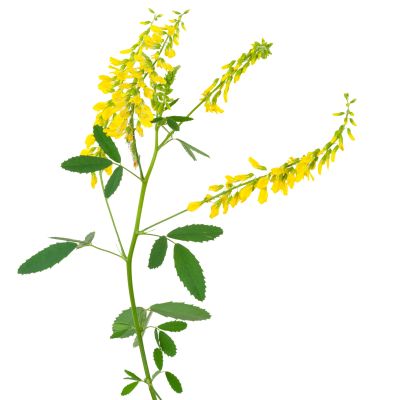
Sweet Yellow Clover (Melilotus Officinalis) – Herb


Thanks to the coumarin and melilotin content, this herb smells like freshly cut grass. You can make it into ointments, poultices and even alcohol – or simply cover the sweet yellow clover with hot water and brew it into a subtly bitter tea to support your liver, blood vessels, and complexion. Or add it to a tea blend! It goes well with lemon balm, valerian, rosehips or St John's Wort.
Shipping methods
| Nizozemská pošta HD - zásilkovna | Delivered by 12. 10. | 1,00 € |
|---|---|---|
 DHL DHL |
Delivered by 12. 10. | 4,90 € |


Ingredients
100 % Yellow sweet cloverBrew & Taste
Brewing this herb produces a pale yellow tea with a scent reminiscent of a summer meadow.
Origins
Botanists have many names for sweet yellow clover. Besides its officinal name Melilotus officinalis, you can also find it as a yellow melilot, ribben melilot, or common melilot. It has yellow flowers, bees love it and you can often find in horse pastures. But livestock doesn't particularly enjoy the taste of this plant.
This biennial plant grows to about 150cm, has trifoliate leaves and, as mentioned, yellow flowers. Because they belong to the Fabaceae family, they can resemble the flowers of an acacia or a cytisus trees. Once pollinated, they produce gray-brown pods containing a few seeds.
Sweetclover is common in Europe, but it can also be found in Asia, and has been introduced to South Africa and America. It usually grows in dry places, in lowlands. Its flowers attract bees, guaranteeing them plenty of food, which is why beekeepers like to plant it as a nectar-forming and pollinating herb. It flowers from June to September.
The contents include coumarin and melitolin. Interestingly, coumarin repels insects and also some rodents. However, we will be more pleased with its sweet smell (it is used as a component of perfumes for a reason) and its involvement in chemical reactions that reduce blood clotting.
Why is sweetclover so popular among herbalists? Taking decoctions of its leaves has a beneficial effect on the normal functioning of the liver, vascular system and tissues. Of course, you can also make it into wine, ointments, poultices or tinctures from it.
But beware – the herb should be avoided by people with coagulation disorders such as hemophilia.
Benefits of ingredients:

Herb packaging preview
We pack our herbs in a strong, zip-lock aluminum packet which allows you to easily re-seal its contents. Thanks to the hermetic seal, the herbs are protected against humidity, light and foreign odors, all of which could noticeably affect the quality of the brew and the herb itself.
Preparation
 100 °C
|
 15 minutes
|
 1 teaspoon for 250 ml
|
Instructions for preparation
Pour 250ml of boiled water (100°C) per 1 teaspoon of tea.
When brewing in a teapot add 1 extra teaspoon.
Covered, let steep for 15 minutes, then remove the strainer.


Are you looking for inspiration? Other customers have bought this:
Lapacho – Herb
Forest Fruit – Fruit Tea