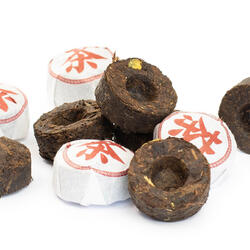
Organic Golden Tippy Ripe King of Pu Erh


King of all Pu Erhs, ruler of a land free of fertilizers and chemical sprays. The organic crown suits him well. The ancestor of teas with a very interesting production process is loved by both admirers of unique taste nuances and devotees of a healthy lifestyle. Try it hot or cold, Organic King of Pu Erh will always take care of your good mood.
Shipping methods
| Nizozemská pošta HD - zásilkovna | Delivered by 15. 10. | 1,00 € |
|---|---|---|
 DHL DHL |
Delivered by 15. 10. | 4,90 € |


Ingredients
100 % Organic King of Pu Erh red teaBrew & Taste
King of Pu Erh gives a chestnut-colored infusion. Its taste can be described as complex, with soft earthy notes. This is traditionally the case with Pu Erh. The aroma has a crispness and a refreshing whiff of freshness.
These teas are great for sipping warm, but also taste great as an iced tea.
Origins

We brought our premium Pu Erh from the South Chinese province of Yunnan. It is one of the traditional strongholds of tea, so it is not surprising that the finest varieties of green tea and Pu Erh come from there. The latter can also be found under the name of red teas. They have a red-colored infusion and are distinguished from black teas by a special production method: the so-called second fermentation. This gives them unique health benefits. Pu Erh has earned the nickname "Chinese penicillin."
In the southwest of Yunnan, on the lower reaches of the Mekong River, we find the town of Pu Erh. It lies at an altitude of 1,300m and has a warm and humid subtropical climate. The hottest month is June (23⁰C) and the coldest is January (14⁰C). It is not without interest that June rainfall accounts for up to 70% of the annual total. Pu Erh is also the name of the city's original Chinese tea, which cannot be mistaken for any other.
Pu Erh is sold either as loose-leaf whole-leaf tea or pressed into a variety of forms. King of Pu Erh is a case in point. The leaves are harvested from tea trees close to the original varieties. They have large leaves and are referred to in China as Ta-Jie (Big Leaf). The bud and 3-4 leaves are hand-picked. They are left to wilt and then heated in large pans. This step is called "killing the green". This is because the natural oxidation of the enzymes is stopped during this process (if it continued, the result would be black tea). The tea is variously rolled and bottled and finally dried, most often in the sun. At this stage, the tea is called Mao Cha, and either goes to market or is further processed. Workers moisten it, pile it into heaps and leave it to ferment. Because the tea leaves naturally harbor strains of bacteria and fungi that thrive on moisture, Mao Cha transforms into the unique Pu Erh, which can take days, months and sometimes years. The moment the plantation manager and the taster acknowledge the maturation process is complete, the tea goes to be sorted, steamed and pressed.
Benefits of ingredients:
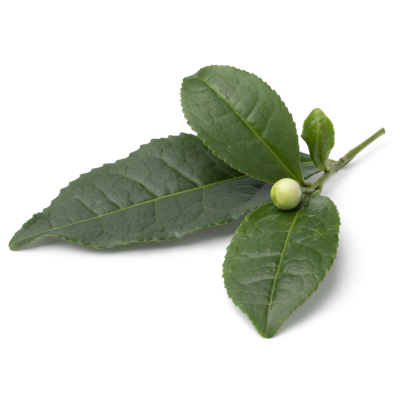

Tea packaging preview
We pack our teas in a strong, zip-lock aluminum packet which allows you to easily re-seal its contents. This container protects the quality of the tea against humidity, light or foreign odors, all of which could noticeably affect the quality of the brew.
Preparation
 100 °C
|
 3-5 minutes
|
 1 teaspoon for 150-200 ml
|
Instructions for preparation
Pour 150-200ml of boiled water (100°C) per 1 teaspoon of tea.
When brewing in a teapot add 1 extra teaspoon.
Covered, let steep for 3-5 minutes, then remove the strainer.


Are you looking for inspiration? Other customers have bought this:
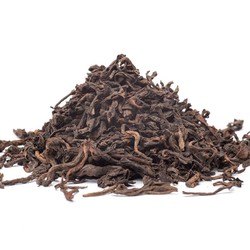
Pu Erh Super Organic
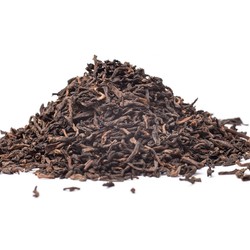
Pu Erh First Grade