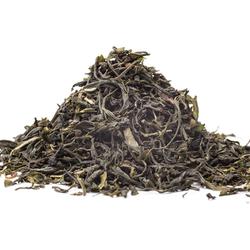
Korea Jeju OP – Organic Green Tea


Beautiful tea with a delicate taste and a sweet finish from the subtropical island of Jeju. Enjoy it to the fullest, because it is truly unique, just like the place where it grows. This wondrous land of volcanic craters, mysterious statues, colorful culture and stunning nature has been attracting travellers for years. Has it captivated you too yet?
Shipping methods
| Nizozemská pošta HD - zásilkovna | Delivered by 22. 10. | 1,00 € |
|---|---|---|
 DHL DHL |
Delivered by 22. 10. | 4,90 € |


Ingredients
100 % Green tea Korea Jeju BioBrew & Taste
Korea Jeju OP tea gives a yellow-green infusion with a fresh aroma and a delicate taste with a sweet finish.
Origins

If you want to know about the green tea from Jeju plantations, take a trip to the O'Sulloc Museum. You'll find it near the town of Seogwangdawon, open year-round 9am-6pm. You literally can't miss it – it's shaped like a teacup and surrounded by tea gardens.
Or you could just read what we have to say about Korean Jeju's beautiful organic tea leaves.
Tea plants were brought to Korea in the 7th century by Buddhist monks. Until the 14th century, tea gardens were a common part of the local landscape and culture. But with the advent of political change, Buddhism was banned and temples and tea plantations were destroyed. It was only after 1945, after their regained independence, that Koreans resumed tea cultivation.
On Jeju Island in particular, farmers took advantage of the volcanic soil and subtropical climate. The island's great advantage is that it is not affected by any industrial pollution, but tea production has been slowed down by the absence of power grids. Jeju, unlike Japan, is also plagued by winter frosts, which are not good for the tea plants. Therefore, large fans and water sprinklers are installed at the plantations to dispel the cold wind. These also help to keep the plants fresh even in times of prolonged drought.
What else is Jeju? The curious fairy stone figures called dol hareubang. Their origin is unknown. Jeju is also famous for its divers, often women who support their families by selling seafoods. They're said to last up to 2 minutes underwater. Today, their generation is in their 70s... Some of them are still actively fishing for crawfish, clams and crayfish.
Green tea from the island between China and Japan is harvested later than, say, in Japan. Its leaves are also larger. The tea is olive green and is dried very slowly and gently. It retains maximum health benefits and a pleasant sweet taste.
Benefits of ingredients:

Tea packaging preview
We pack our teas in a strong, zip-lock aluminum packet which allows you to easily re-seal its contents. This container protects the quality of the tea against humidity, light or foreign odors, all of which could noticeably affect the quality of the brew.
Instructions for preparation
Pour 1l of boiled water (70-80°C) per 12-15g of tea.
Steep for 1-2 minutes, then remove the strainer.
This tea can be steeped up to 3 times.


Are you looking for inspiration? Other customers have bought this:
Masala Chai – Black Tea
Yunnan China FOP – Green Tea