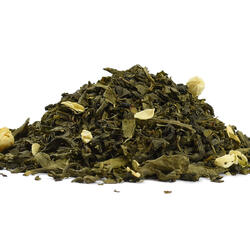
Japan Setoyama Shincha Kabusecha – Green Tea


Young, fresh, full of energy. That’s this unique tea from the first spring harvest. Shincha, cultivated on the Setoyama farm, perfectly embodies what we love about Japanese green tea: subtlety, rich umami, and delicious freshness. It’s a masterpiece of Japanese nature created with the hands of local farmers. Before harvest, the plants were shaded from the sun, so you can look forward to a literal green treasure. Elegant and cultured.
Shipping methods
| Nizozemská pošta HD - zásilkovna | 1,00 € | |
|---|---|---|
 DHL DHL |
4,90 € |


Ingredients
Brew & Taste
Japan Shincha Setoyama Kabusecha unfolds in the cup into a bright green to golden-green hue, immediately suggesting that you are dealing with a tea full of chlorophyll and amino acids. The aroma is grassy, slightly sweet, with a hint of freshly picked tea leaves. The taste will surprise you with its smoothness, rich umami, and very subtle, almost imperceptible astringency. This tea is best savored slowly, while focusing on each sip.
Origins

So, you want the facts? Okay: Setoyama Farm is located in the Kobayashi area, at the eastern foot of the Kirishima volcanic massif in Miyazaki Prefecture on the island of Kyushu.
But let’s go into more detail: this is a region with a long tea tradition, which in recent years has established itself as one of the most interesting in Japan. Kobayashi is known for its hilly terrain, which ensures natural drainage and creates a microclimate ideal for growing high-quality tea cultivars. The altitude of the plantations (between 300 and 540 meters) and the significant temperature differences between day and night ensure slow, balanced growth of tea leaves as well as a higher content of valuable substances, especially theanine and amino acids. The humid, subtropical climate with ample rainfall and long sunny days is also important. It’s also worth mentioning that local soil has a volcanic origin, so it’s rich in minerals.
Miyazaki Prefecture is one of Japan's leading tea-growing regions. Although there aren’t as many tea producers here as in Shizuoka or Kyoto, local farms often operate on a smaller scale, with an emphasis on quality, ecology, and traditional processing. Every year, connoisseurs seek out shincha from Miyazaki for its freshness, subtleness, and exceptional sweetness.
Of course, we must mention that Japan Shincha Setoyama Kabusecha is the result of the careful work of many skilled human hands. The Yabukita cultivar tea trees were shaded for 14 days before harvesting, which increased the chlorophyll and theanine content in the leaves and reduced the proportion of catechins that cause astringency. The harvest took place at the end of April, a period considered by the Japanese to be the peak of the tea season – the first harvest (shincha) is traditionally considered the most valuable and aromatic. It’s this harvest that best reflects the character of the place, the quality of care, and the beauty of spring.
Benefits of ingredients:

Tea packaging preview
We pack our teas in a strong, zip-lock aluminum packet which allows you to easily re-seal its contents. This container protects the quality of the tea against humidity, light or foreign odors, all of which could noticeably affect the quality of the brew.
Preparation
 70-80 °C
|
 2-3 minutes
|
 1 teaspoon for 150-200 ml
|
Instructions for preparation
- Pour 150-200ml of boiling water (70-80°C) per 1 teaspoon of tea.
- When brewing in a teapot, add 1 extra teaspoon.
- Covered, steep for 2-3 minutes, then remove the strainer.


Are you looking for inspiration? Other customers have bought this:
Japan Sencha Makoto – Green Tea
Japan Bancha Premium – Green Tea