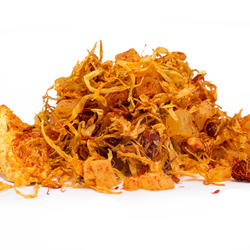
Fruit Magic – Pink Fruit Infusion


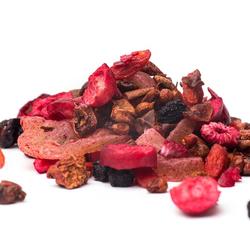
This magic will make any craving go away! Fragrant, fruity and sweet, this perfectly pink tea will not only quench your thirst, but also your desire for a sugar bomb. It replaces the high-calorie treats and makes you feel good right after the first sip. Small children love it, but any tea enjoyer can appreciate its signature taste. Some Fruit Magic makes every trip an adventure and every snack break a lovely treat.
Shipping methods
| Nizozemská pošta HD - zásilkovna | Delivered by 22. 10. | 1,00 € |
|---|---|---|
 DHL DHL |
Delivered by 22. 10. | 4,90 € |


Ingredients
Dragon fruit chunks, Candied mango (mango, sugar), Candied pineapple (pineapple, sugar), Candied papaya (papaya, sugar), Candied guava (guava, sugar), Banana chips, Melon, Natural aroma, Orange granulateBrew & Taste
Fruit Magic tea is truly magical. It will delight you with its amazing pink color of the infusion, but especially with the beautiful scent of tropical fruit. And the taste is just wonderful. Thanks to the balanced ratio of many exotic fruits, you will enjoy a cup of a truly sweet, soft drink. It doesn't even need a drop of honey or a teaspoon of sugar. It's simply perfect. Hot or iced.
Origins
Each ingredient in this blend has its own story. They're all sourced from a European supplier who ensures its quality is 100% and that the processing, storage and shipping were up to the highest standard. No effort was spared to make sure this tea is suitable for not only regular enjoyers, but most importantly small children. Let's briefly look at at least 3 of its main ingredients.
You may know dragon fruit as pitahaya, or a large red fruit with a few green scales. It can weigh up to 1.5kg. When peeled, a white juicy flesh with small black seeds emerges. Pitahaya tastes sweet, a bit like watermelon. It is popular raw as well as for making drinks, including tea. The flesh of the dragon fruit contains iron, phosphorus, calcium, vitamins B, E and C. It is the pitahaya that causes the pink color in Fruit Magic. As for the plant, it is a vine of the Hylocereus genus, which can grow to 100m length. It is native to Central America, but has spread to Asia, northern Australia and other areas.
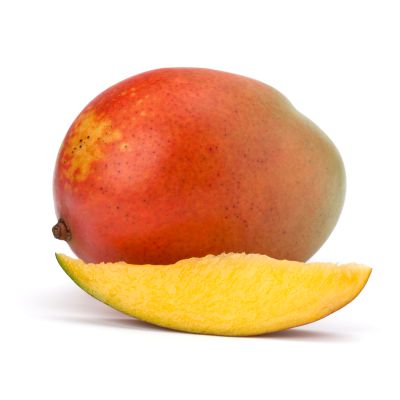
The second important ingredient in this tea is mango, a fruit packed with vitamin A, pleasant aroma and delicious taste. It is the fruit of the mango tree of the genus Mangifera, which has existed on Earth for perhaps 30 million years. Mangoes are popular both for their high nutritional values and for their many uses in gastronomy. Its flesh can be eaten directly or processed into jams and drinks or used as a side dish for main courses. Mango trees grow in the tropics, reaching heights of up to 30m, and are thought by scientists to come from to Southeast Asia.
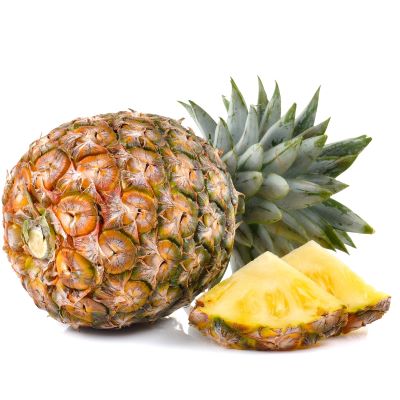
Small children often think that pineapples grow on trees. The idea is nice, but it is far from reality. The pineapple (Ananas comosus) is an herb about 1.5m tall with long, pointed leaves that sit close to the ground. In the center appears a large cone with hundreds of flowers. After flowering, the emerging berries coalesce into a single fleshy fruit, i.e., the pineapple. Its taste and appearance probably do not need to be described, but it is important to know that pineapples are rich in the enzyme bromelin and also contain vitamins A, B1, B2 and C and minerals such as iron, phosphorus, calcium and potassium. Like the previous fruits, pineapples should be eaten fresh, but they are also suitable for making drinks, jams and sweets. Pineapples grow mainly in the tropics and subtropics, with most of the world's production comes from Thailand, China, and the Philippines.
Benefits of ingredients:

Tea packaging preview
We pack our teas in a strong, zip-lock aluminum packet which allows you to easily re-seal its contents. This container protects the quality of the tea against humidity, light or foreign odors, all of which could noticeably affect the quality of the brew.
Preparation
 100 °C
|
 8-10 minutes
|
 1 teaspoon for 150-200 ml
|
Instructions for preparation
Pour 150-200ml of boiled water (100°C) per 1 teaspoon of tea.
When brewing in a teapot add 1 extra teaspoon.
Covered, let steep for 8-10 minutes, then remove the strainer.


| Energy value: | 18 kJ / 4 kcal |
| Fats: | < 0,5 g |
| of which saturated: | < 0,1 g |
| Carbohydrates: | 1,1 g |
| of which sugars: | 1,1 g |
| Proteins: | < 0,5 g |
| Salt: | < 0,01 g |
Are you looking for inspiration? Other customers have bought this:
Child's Dream – Fruit Infusion
Goji-Raspberry – Fruit Infusion