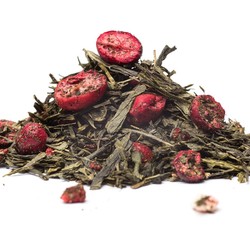
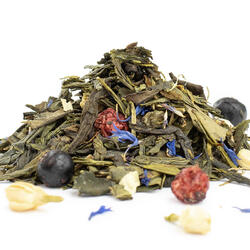
Forest Witch – Green Honeybush


In the times of uncertainty, our path leads us into the forest, where we're surrounded by morning dew and soft moss. At noon, the smell raspberries lingers, and when the sun dips beneath the horizon, tiny strawberries light up the path. In the evening, silence fills the landscape, and our minds are spellbound by its peace and serenity. Or is it the doing of the Forest Witch?
Shipping methods
| Nizozemská pošta HD - zásilkovna | Delivered by 22. 10. | 1,00 € |
|---|---|---|
 DHL DHL |
Delivered by 22. 10. | 4,90 € |


Ingredients
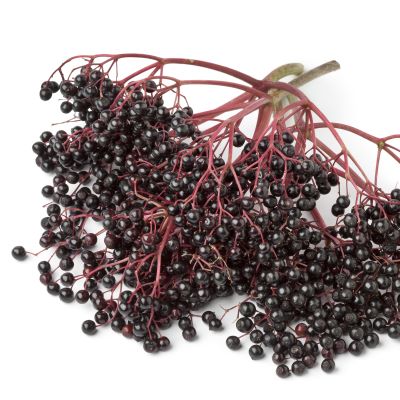
70 % Green Honeybush, Apple chunks, 10 % Elderberry, Natural aroma, Raspberry leaves, 1 % Strawberries, 1 % BlackcurrantBrew & Taste
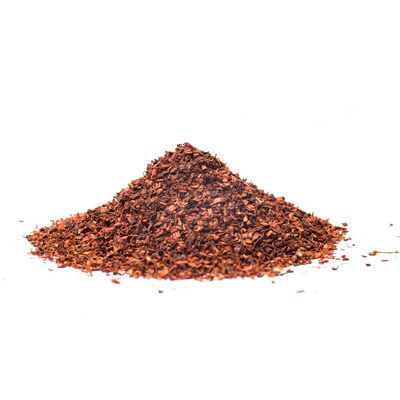
Honeybush is characterized by a dark yellow infusion, an exceptionally delicious aroma and a honey taste. The variety in this tea is not fermented. Because we've added wild berries, every sip is marked with a soft touch of strawberries, raspberries and elderberries. Honeybush is a hit for anyone looking for natural, caffeine-free teas.
This tea is suited for small children, pregnant and nursing women as well as people in recovery and seniors.
We recommend you try the Forest Witch in the form of iced tea as well. Just fill 2/3 of a tall glass with ice cubes and pour the hot drink over them. The result will surprise you with a nice taste that doesn't need to be sweetened, and a great aroma.
Origins
Although Honeybush is classified as a tea, it's not tea in the traditional sense. True teas are harvested from Chinese tea trees, but this healthy beverage comes from the so-called 'honeybush' (Cyclopia intermedia), which grows exclusively in the Southern and Eastern Cape region of South Africa. It belongs to the fabaceae, but has not yet been commercially cultivated. This is because of its specific requirements for soil and humidity, as well as its extreme sensitivity to chemicals. On the other hand, this is great for people who oppose artificial fertilizing, spraying and other modern chemical treatments. It grows in the wild, mostly in the mountains, so harvesting it is usually quite complicated. The 1,5m tall shrub is traditionally during the flowering period The yellow branches have a very strong honey scent and attract swarms of bees. It is at this point that foragers head for the inaccessible places in search of honeybush. They cut whole plants just above the ground, fill large baskets with them and lower them on simple pulleys to lower them into the valley. On the processing farms, the whole twigs and needle-like leaves are cut to a length of 6-30mm. In the case of green honeybush, the fermentation process is omitted, the plant is simply dried in the sun for 1-2 days. Finally, it passes through cylindrical screens that separate pieces that are too large and thick. The resulting honeybush is packed in woven bags and taken to the market.
The apples, strawberries, blackcurrants and raspberries are all of EU origin. We buy them from certified suppliers who guarantee the highest quality. The fruit is freeze-dried so that it retains all its sensory properties and up to 90% of its vitamin content.
Benefits of ingredients:


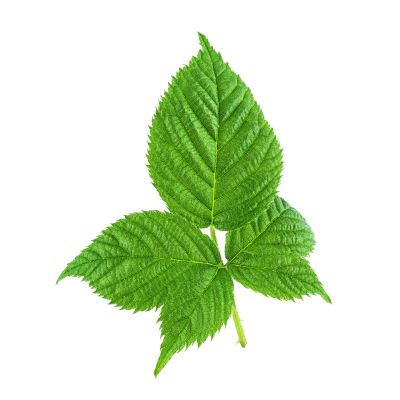
Tea packaging preview
We pack our teas in a strong, zip-lock aluminum packet which allows you to easily re-seal its contents. This container protects the quality of the tea against humidity, light or foreign odors, all of which could noticeably affect the quality of the brew.
Preparation
 100 °C
|
 3-5 minutes
|
 1 teaspoon for 150-200 ml
|
Instructions for preparation
Pour 150-200ml of boiled water (100°C) per 1 teaspoon of honeybush.
When brewing in a teapot add 1 extra teaspoon.
Covered, let steep for 3-5 minutes, then remove the strainer.


Are you looking for inspiration? Other customers have bought this:
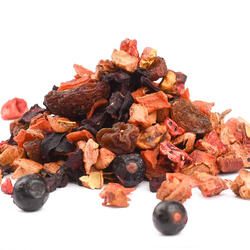
Child's Dream – Fruit Infusion