Darjeeling Moonlight Upper Fagu First Flush – Black Tea

Try the first harvest of the year from the prestigious Upper Fagu tea garden. Tea leaves were picked at the beginning of spring, just when the camellias were coming back to life, so you can enjoy their fresh, floral flavor and mild sweetness. Why Moonlight, you ask? Because it was harvested in the cool, early morning. It’s as authentic as possible and the flavor and aroma will charm absolutely anyone.
Shipping methods
| Nizozemská pošta HD - zásilkovna | Delivered by 23. 9. | 1,00 € |
|---|---|---|
 DHL DHL |
Delivered by 23. 9. | 4,90 € |


Ingredients
100 % Darjeeling Moonlight Upper Fagu First FlushBrew & Taste
Darjeeling Moonlight Upper Fagu First Flush has a light, golden amber color after brewing. It gives off the fresh vibes of early spring. The taste is delicate and balanced, light yet distinct with tones of blooming mountain flowers, young herbs and a mild, sweet aftertaste that lingers on the palate. The careful harvest of only the youngest two leaves with the bud makes this tea naturally refreshing, airy, and elegant.
Origins

The Upper Fagu Tea Estate is located in the foothills of the Himalayas, specifically in the Darjeeling region. It was established in the mid-19th century during the British colonial era and lies at an altitude of approximately 400m. Today it covers an area of 103 hectares, its specific microclimate determined by a combination of cool nights and foggy mornings – the exact conditions that the local tea plants, Camelia sinesis, require to thrive.
The first harvest time of the year, known as the First Flush, falls between March and May. It’s when the most prized tea leaves are manually picked, namely the two youngest leaves and the bud, to ensure that the resulting tea is of the highest quality and authenticity. The leaves are processed by the workers with minimal oxidation, so they retain their light color and delicate floral aroma.
Darjeelings are called 'the champagne of teas'. They are similarly unique and similarly rare. The new black tea from Upper Fagu's first harvest represents the peak of the spring harvest there.
But you should be aware that on average, approximately 40,000t of tea labelled as Darjeeling are sold on the world market each year even though the production in only somewhere between 8,000-11,000t. This difference leads to an easy conclusion – most of the teas labelled as Darjeeling don’t come from this prestigious area at all and are, in fact, a blend. Most often these are Nepali teas, similar in appearance and taste but lacking the characteristic qualities of a genuine Darjeeling.
Indian authorities and organizations such as the Tea Board of India are trying to combat this problem. This is why, since 2004, Darjeeling tea has been labelled as a Geographical Indication, a form of legal protection confirming that a product originates from a specific area and has a specific character, quality or reputation linked to that geographical origin. In the case of Darjeeling tea, GI means that genuine Darjeeling tea can only be grown, harvested and processed in 87 officially recognized tea gardens in the Darjeeling region of West Bengal, India.
Genuine Darjeeling teas will always have the designated GI logo – a woman’s side profile with a hand holding a sprig of tea leaves along with the words 'Darjeeling Tea – Registered GI'.
Benefits of ingredients:
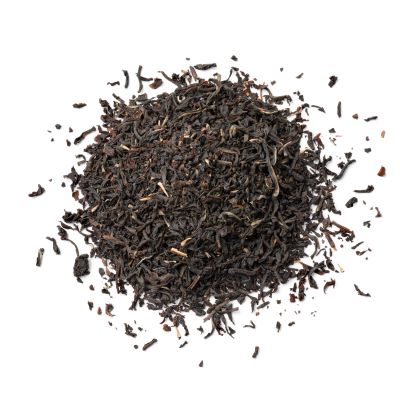

Tea packaging preview
We pack our teas in a strong, zip-lock aluminum packet which allows you to easily re-seal its contents. This container protects the quality of the tea against humidity, light or foreign odors, all of which could noticeably affect the quality of the brew.
Preparation
 90 °C
90 °C
|
 3-5 minutes
|
 1 teaspoon for 150-200 ml
|
Instructions for preparation
1. Pour 150-200ml of boiling water (90°C) per 1 teaspoon of tea.
2. When brewing in a teapot add 1 extra teaspoon.
3. Covered, let steep for 3-5 minutes, then remove the strainer.


Are you looking for inspiration? Other customers have bought this:
Lychee Gold Dragon Pearl – Black Tea
China Yunnan Feng Qing – Black Tea