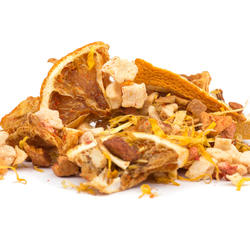
Bright Mango – Fruit Infusion


Mango... The smell of this fruity tea will make you close your eyes and enjoy the moment. Calm your breathing and let your mind wander a bit. Perhaps it will take you to South Asia, where these sweet fruits were cultivated thousands of years ago. Or to Spanish Andalusia, where they're harvested today. Either way, you're in for an uplifting experience.
Shipping methods
| Nizozemská pošta HD - zásilkovna | Delivered by 8. 10. | 1,00 € |
|---|---|---|
 DHL DHL |
Delivered by 8. 10. | 4,90 € |


Ingredients
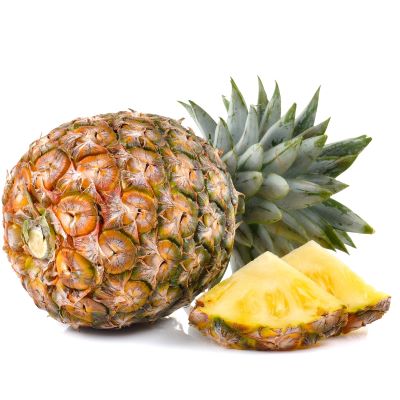
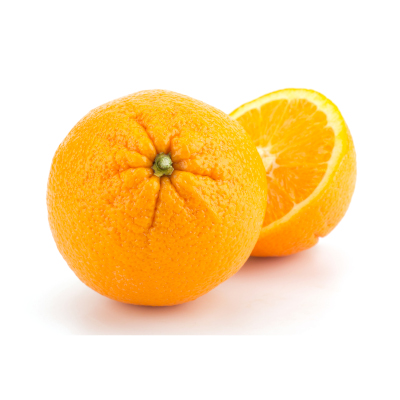
Candied pineapple (pineapple, sugar), 30 % Candied mango (mango, sugar), Orange wedges, Strawberry chunks, Pot marigold flower, Safflower, Vitamin C, E, B6, B1, B12, Folate, Biotin, Natural aromaBrew & Taste
The Bright Mango tea produces a light yellow to light orange infusion. The aroma of the drink is extremely pleasant with the sweet and sour notes of the fruit. When tasted, the composition comes across very harmonious and delicate, slightly citrusy.
Origins
The ingredients all come from a verified European supplier. The fruit has been preserved by what is known as freeze-drying. This is a unique, demanding process based on the sublimation of frozen water at low pressure and temperature. It is used for materials that can be damaged by higher temperatures. In this case, it's pieces of fruit, which, by the way, are really large. Freeze-drying guarantees the preservation of vitamins and other health-giving substances, as well as natural color, scent and taste.
The herbs have been dried as well as stored under very strict conditions . All the ingredients of Bright Mango tea are the product of organic farming and therefore don't contain any harmful substances.
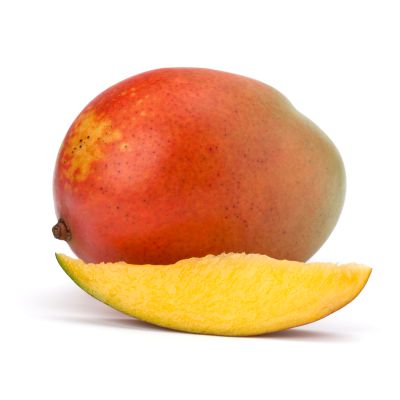
If you are interested in the details of the main ingredient of the tea, then we are happy to say that mango is one of the most cultivated fruits in the world. Its popularity has even earned it the name king of fruits or fruit of the gods. The fruit of the mango tree, usually 35-40m tall, was first mentioned in writing in 1510 in an Italian text by Ludovico di Varthema.
Mangoes were originally cultivated in South and Southeast Asia. It is said to have been known to humans as early as the 4th century BC. It thrives in tropical and subtropical climates. Today, India, China, Spain, but also America, Africa, Australia and South Korea are major producers.
The ripe mango fruit can vary in color depending on the cultivar – they can be yellow, orange, red or green. They are usually sweet and taste similar to plums, pineapple melon or avocado. They are used in many dishes and drinks. Unripe mangoes are processed into chutneys or pickled. Ripe fruits can be eaten directly or dried, added to desserts, etc.
Nutritionally, mangoes contain vitamin A, B vitamins, vitamin C, E and K. It is also valued for its high content of potassium, calcium and magnesium.
Benefits of ingredients:

Tea packaging preview
We pack our teas in a strong, zip-lock aluminum packet which allows you to easily re-seal its contents. This container protects the quality of the tea against humidity, light or foreign odors, all of which could noticeably affect the quality of the brew.
Preparation
 100 °C
|
 8-10 minutes
|
 1 teaspoon for 150-200 ml
|
Instructions for preparation
Pour 150-200ml of boiled water (100°C) per 1 teaspoon of tea.
When brewing in a teapot add 1 extra teaspoon.
Covered, let steep for 3-5 minutes, then remove the strainer.


| Energy value: | 13 kJ / 3kcal |
| Fats: | 0.1 |
| of which saturated: | 0.1 |
| Carbohydrates: | 0.7 |
| of which sugars: | 0.6 |
| Proteins: | 0.1 |
| Salt: | 0.01 |
Are you looking for inspiration? Other customers have bought this:
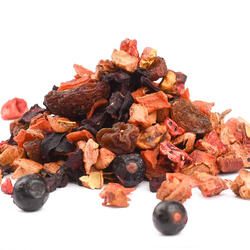
Child's Dream – Fruit Infusion
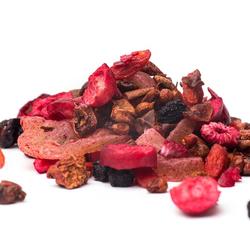
Goji-Raspberry – Fruit Infusion