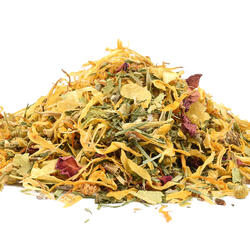
Angelica Root (Archangelica Officinalis) – Herb


The root of Norweigan angelica is described in almost every historical book of herbs. Why? Because it has a unique taste and, according to a Christian legend, it was brought to us by the Archangel Michael himself. Its uses vary – you can make tea or add it to a sauce or salad, but it is equally good if you add it to a bath. Those who enjoy angelica support their normal digestion, respiratory system, and immunity.
Shipping methods
| Nizozemská pošta HD - zásilkovna | Delivered by 8. 10. | 1,00 € |
|---|---|---|
 DHL DHL |
Delivered by 8. 10. | 4,90 € |


Ingredients
100 % Angelica rootBrew & Taste
Angelica officinalis root is strongly aromatic. The taste is bittersweet and peppery at the same time. It's used not only as a tea ingredient but also as a spice. You can also use angelica root in the bath.
Origins
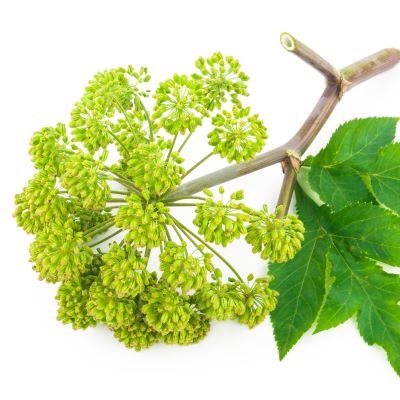
Angelica officinalis is a tall, creeping herb that can reach a height of up to 2.5m. Originally, it grew in the Alps, Scandinavia, or the Carpathian Mountains but is now widespread in much of Europe. It prefers humid areas and higher altitudes, which is why it is often found on the banks of mountain streams.
It is relatively easy to recognize due to its unmistakable look. It has a long, striated, and hollow stem, distinctive leaves with serrated margins and flowers in a circular pattern (similar to ivy or cornel). Flowering angelica can be seen in July and August. Their ripe seeds are used as a spice, but more interesting is the angelica root, which contains resins, tannins and other compounds.
The root, which resembles a carrot in shape, needs to be dried for a very long time and at a very low temperature. If you try to do this yourself, beware of so-called phytophotodermatitis – contact with the juices of the root, combined with sunlight, can burn your skin.
Angelica has been well-known since the Middle Ages as a spice or an ingredient in teas and baths, and the decoction can also be used as a gargle. Botanists only warn of sun exposure during prolonged use.
Benefits of ingredients:

Herb packaging preview
We pack our herbs in a strong, zip-lock aluminum packet which allows you to easily re-seal its contents. Thanks to the hermetic seal, the herbs are protected against humidity, light and foreign odors, all of which could noticeably affect the quality of the brew and the herb itself.
Preparation
 100 °C
|
 10-15 minutes
|
 1 teaspoon for 150-200 ml
|
Instructions for preparation
Pour 150-200ml of boiled water (100°C) per 1 teaspoon of tea.
When brewing in a teapot add 1 extra teaspoon.
Covered, let steep for 10-15 minutes, then remove the strainer.


Are you looking for inspiration? Other customers have bought this:
Japan Bancha Premium – Green Tea
Jasmine – Green Tea