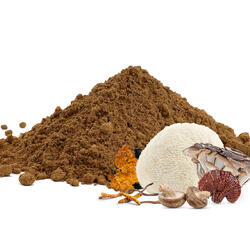
Triphala – Organic Powder


This unexpected trio can do some exceptional things. Powder from the haritaki, amalaki and bibhitaki herbs is one of the staples of Ayurveda. Now it's gaining popularity mainly due to its ability to harmonize and regenerate the body or enhance vitality. The ancient formula is created to benefit the three energies of the body – Vata, Pitta and Kapha. People used it for over 5,000 years, and now you can try it too.
Shipping methods
| Nizozemská pošta HD - zásilkovna | Delivered by 22. 10. | 1,00 € |
|---|---|---|
 DHL DHL |
Delivered by 22. 10. | 4,90 € |


Ingredients
100 % Organic TriphalaBrew & Taste
Triphala powder has a light brown-green to sandy color and an earthy aroma. It tastes sour and bitter. You can mix it in water, tea or milk.
Origins
It's no secret which 3 ingredients the Triphala powder is blended from. Perhaps the only mystery is the ratio, but let's leave that to the ancient Ayurvedic healers. Considering the health benefits that Triphala has had for thousands of years, let us rely on its advantages. How else to explain the ever-increasing worldwide popularity of this not-so-tasty powder...
The name Triphala literally means "three fruits" in Sanskrit. Specifically, it refers to the fruit of the emblic (Phyllanthus emblica) – or amalaki; the bastard myrobalan (Terminalia belerica)– or bibhitaki; and the chebulic myrobalan (Terminalia chebula) – or haritaki. But let's take a look at each fruit separately.
You may know the emblic or amalaki as the Indian gooseberry. It's a small deciduous tree native to India, but nowadays it grows in Europe, South and North America. They look really like gooseberries, about 2.5cm in size, smooth, and pale yellow. They taste sour and bitter at the same time. Some sources claim that amalaki is the richest natural source of vitamin C in the world. In 10g of the fruit there is as much as in 2kg of oranges or 15kg of apples. In addition to vitamin C, these fruits also contain vitamins B1 and B2, vitamin P and minerals (calcium, iron, chromium, zinc, copper, phosphorus). Amalaki is also valued for its tannin content, which is a powerful antioxidant. Fresh fruits can be eaten in salt brine, which suppresses their acidity. More commonly, however, amalaki is available as a powder or in capsules or tinctures.
The baheda tree is a deciduous tree found in India, Malaysia, Burma, the Philippines, and Sri Lanka. The fruits are pale yellow or green, ovoid, with a single pit. The taste is astringent and sweet. The active constituents of bibhitaki are gallic acid, ellagic acid, vitamin C, and selenium, manganese, potassium, iron, and copper.
The terminalia chebura tree produces 3-6cm long, oval-shaped drupes that are yellow-brown in color. The tree, which can reach up to 30m in height, grows in India, Nepal and southwest China. The so-called haritaki contains mainly chebulosides, coumarins, vitamin A and other beneficial compounds. It tastes astringent and salty.
Triphala powder is mixed from all the three mentioned fruits. Traditional practice recommends its long-term use, either by itself or with water or milk. Triphala should be consumed before going to sleep. The treatment starts with 1 teaspoon 1 time a day (during the first week), continues with 1 teaspoon 2-3 times a day (during the second and third weeks) and ends with 1 teaspoon 1-2 times a day (in the last week).
Herb packaging preview
We pack our herbs in a strong, zip-lock aluminum packet which allows you to easily re-seal its contents. Thanks to the hermetic seal, the herbs are protected against humidity, light and foreign odors, all of which could noticeably affect the quality of the brew and the herb itself.
Instructions for preparation
Stir 1-2 teaspoons of the powder in any amount of water or milk.
You can also make a paste: put a few teaspoons of Triphala in a glass, add twice as much water and stir. You can dilute the paste as needed without creating unwanted lumps.


Are you looking for inspiration? Other customers have bought this:
Manuhan – Ayurvedic Herbal Tea
Masala Chai – Black Tea