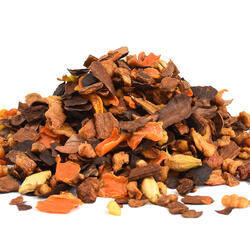
Sweet Meringue – Fruit Tea


The more loved the person, the sweeter the kiss. If you don't have one nearby, or if you're curious what a tea kiss might taste like, treat yourself to Sweet Meringue tea. It'll charm you as soon as you smell the sweet scent of a box of chocolate. The taste will tempt you with soft notes of fruit and cinnamon. Take the invitation and indulge in this heavenly treat!
Shipping methods
| Nizozemská pošta HD - zásilkovna | Delivered by 22. 10. | 1,00 € |
|---|---|---|
 DHL DHL |
Delivered by 22. 10. | 4,90 € |


Ingredients
Roasted apple chunks, White apple chunks, Pineapple chunks (pineapple, sugar, antioxidant: citric acid), Marshmallow, 8 % Pear chunks, 4 % Ceylon cinnamon chunks, Natural aroma, White Cornflower petalsBrew & Taste
Sweet Meringue fruit tea will charm you as soon as you open the bag. The wonderful, sweet "candy" aroma is accompanied by a light trace of cinnamon. The taste will not disappoint you either – you will recognize your favorite sweets, ripe pears and, of course, the aforementioned cinnamon. The tea is light and you can enjoy no matter the time of day or season of the year.
Origins
Where did this wonderful composition of flavors and aromas come from? It is the result of carefully selected, harvested and processed fruit from several European gardens. Our suppliers care for their products with love, so you can be sure you'll find only ripe pieces of rigorously processed fruit and spices in Sweet Meringue tea.
You might think you know everything about apples, but we might surprise you with something. There's no need to describe what an apple tree looks like. The fact it's a deciduous tree is common knowledge too. What may come as a surprise is that people have been growing apple trees since ancient Greece and sacrificing apples to the god Bacchus every year. The ancient Romans began grafting apple trees, creating noble varieties. It is said that there were exactly 17 varieties, which gradually replaced the original trees. The apple tree probably arrived in Europe after the Roman invasion, around 84 AD. Today, some 35,000 varieties of apple trees have been described worldwide, and the annual harvest of the popular fruit reaches 50 million tons. Most apples are consumed by the Dutch, followed by Austria and Hungary.
Apples are a source of valuable nutrients, including calcium, iron, phosphorus, magnesium, as well as pectin and a number of beneficial enzymes. Apples are best eaten fresh, but are also used to make juices and spirits, and can be dried or preserved.
Pears are slightly less popular, and were considered not very good by the ancient Romans and Greeks. The dact that they have a tendency to suffer from scorch, which wiped out many orchards, did not help their reputation. Fortunately, pear cultivation has taken off successfully as part of the development of fruit growing and today there are 2,500 varieties to choose from. The fruit of the pear tree, the pear, contains vitamin A, vitamin B, vitamin C and vitamin E, iron, potassium and zinc. They also contain fiber, tannins and flavonoids. Like apples, pears are great fresh, but they can be confitured, made into jams or made into a spirit.
Tea packaging preview
We pack our teas in a strong, zip-lock aluminum packet which allows you to easily re-seal its contents. This container protects the quality of the tea against humidity, light or foreign odors, all of which could noticeably affect the quality of the brew.
Preparation
 100 °C
|
 8-10 minutes
|
 1 teaspoon for 150-200 ml
|
Instructions for preparation
Pour 150-200ml of boiled water (100°C) per 1 teaspoon of tea.
When brewing in a teapot add 1 extra teaspoon.
Covered, let steep for 8-10 minutes, then remove the strainer.


| Energy value: | 9 kJ / 2 kcal |
| Fats: | 0 g |
| of which saturated: | 0 g |
| Carbohydrates: | 0.5 g |
| of which sugars: | 0.5 g |
| Proteins: | 0 g |
| Salt: | 0 g |
Are you looking for inspiration? Other customers have bought this:
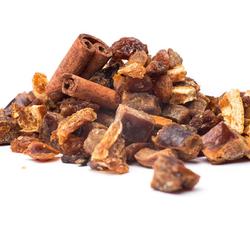
Vanilla Plum – Fruit Infusion
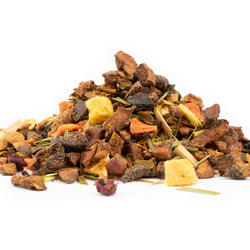
Grapefruit Miracle – Fruit Infusion