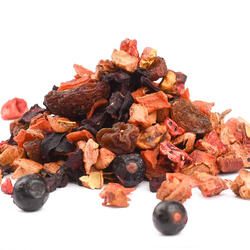
Raspberry Panna Cotta – Fruit Tea


Silky – no other way to put it. Because raspberry panna cotta does not only smell like fresh raspberries dipped in soft, sweet, fresh cream – it also tastes just like that. And we’ve added some apple bits, coconut flakes, marshmallows and hibiscus. A perfect way to start and end your day with a little treat. And you’ll crave this tea all year round.
Shipping methods
| Nizozemská pošta HD - zásilkovna | Delivered by 22. 10. | 1,00 € |
|---|---|---|
 DHL DHL |
Delivered by 22. 10. | 4,90 € |


Ingredients
Apple Bits (Apples, Citric Acid), Sugar Bits, Hibiscus flower, Carrot chunks, Raisins, Yoghurt granulate, Coconut Shavings (Coconut, Sugar), Beetroot, Marshmallow, 1 % Raspberries, AromaBrew & Taste
This beautiful dark red tea will wrap your senses in the softest, sweetest sensations. Tastes like garden-grown raspberries combined with silky yoghurt and fresh hibiscus. As for the aroma – a light pleasant balance of sweet and sour that will instantly make your mouth water.
Origins
We’re certain you know a lot about raspberries – but we’ll tell you a little more. Like how they were already loved in the times of ancient Rome.
Raspberries, scientifically named Rubus Idaeus, are the fruit of bush in the rose family. The first written records indeed come from ancient Rome, where they were considered a true delicacy. Their raspberry fever then spread all throughout Europe and America. Today, raspberry bushes are grown in Europe, but also in North America and even Asia. Raspberry shrubs prefer humid climate and slightly lower temperatures, so you can usually find raspberries along forest edges, clearings or in higher altitudes. Thanks to their popularity, they’re also grown on plantations for commercial purposes.
But how does a raspberry bush look? Well, it’s a perennial shrub with thorny, woody stems and green oblong leaves. In the spring, the shrub blooms with small, white flowers which later develop into fruit – raspberries. We mostly know raspberries to be pinkish-red, but they may vary in color based on the species, from yellow to black. Every berry is composed of many tiny parts.
It's also good to know that raspberries are packed with antioxidants, especially vitamin C, vitamin K, folic acid and manganese. They contain flavonoids and polyphenols and raspberry seeds are rich in omega-3 and omega-6 fatty acids.
Raspberries taste best fresh, whether it’s in a dessert, a smoothie or even a salad. However, you can process them into delicious jams, sirups, wines or spirits. Dried raspberries are a popular addition in fruit teas.
Similar to raspberries, red is also a signature color for hibiscus. It’s what gives our raspberry panna cotta tea that beautiful red shade. Hibiscus grows in warm tropical and subtropical areas all around the world, though originally it’s from Africa and Asia. The tradition of cultivating hibiscus exists for millennia, reaching as far back as ancient Egypt, where it was uncovered in tombs alongside other offerings. Thanks to this discovery, we can venture a guess that it was valuable in the times of pharaohs as well.
Hibiscus is a medium sized bush with green leaves and big, rose-like flowers. The flowers come in many colors, from white to pink to red. Its petals are commonly used all around the world to create the popular drink known as carcade (also karkade/karkhade) – or hibiscus tea, which can be drank both hot or cold. It has a tart and sour taste which is highly regarded for its refreshing effects. Hibiscus petals can be also used in jam making, sauces or even sirups. It’s rich in antioxidants such as vitamin C and flavonoids, but it also contains organic acids and anthocyanins.
Tea packaging preview
We pack our teas in a strong, zip-lock aluminum packet which allows you to easily re-seal its contents. This container protects the quality of the tea against humidity, light or foreign odors, all of which could noticeably affect the quality of the brew.
Preparation
 100 °C
|
 8-10 minutes
|
 1 teaspoon for 150-200 ml
|
Instructions for preparation
- Pour 150-200ml of boiling water (100°C) per 1 teaspoon of tea.
- When brewing in a teapot add 1 extra teaspoon.
- Covered, let steep for 8-10 minutes, then remove the strainer.


| Energy value: | 15 kJ / 4 kcal |
| Fats: | 0.5 g |
| of which saturated: | 0.1 g |
| Carbohydrates: | 0.9 g |
| of which sugars: | 0.9 g |
| Proteins: | 0.5 g |
| Salt: | 0.01 g |
Are you looking for inspiration? Other customers have bought this:
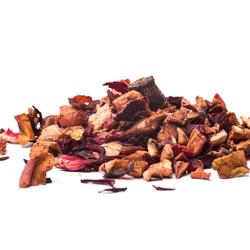
Peach-Apricot Magic – Fruit Infusion
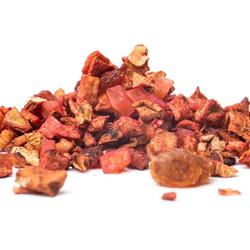
Creamy Raspberries – Fruit Tea