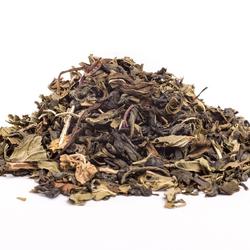
Moringa-Mango – Organic Herbal Tea


Moringa is full of essential amino acids and important antioxidants. We've added some mango chunks, apples, pineapple and carrots to create a tea with a great taste and even greater benefits. It's caffeine-free, so it's handy for those times when you want to rest and perhaps get ready for sleep. What's more, all of the ingredients are organic!
Shipping methods
| Nizozemská pošta HD - zásilkovna | 1,00 € | |
|---|---|---|
 DHL DHL |
4,90 € |


Ingredients
Apple chunks BIO, Carrot chunks BIO, 5 % Mango chunks BIO, 17 % Moringa leaves BIO, Pineapple chunks BIO, Bramble leaves BIO, Natural aroma BIO, Rose petals BIOBrew & Taste
Moringa-Mango tastes sweet and refreshingly fruity. Because moringa has a naturally herbal taste, it combines well with fruit, namely sweet apples and carrots, exotic mangoes and sour pineapple. The resulting composition is harmonious, neither bitter nor astringent. The tea smells fruity and its color can be described as yellow to yellow-green.
Origins
If you are looking for the origin of moringa, you'll end up in the southern foothills of the Himalayas. Moringa oleifera is a deciduous tree about 12m tall with white-grey bark and tridentate leaves. It blooms with inconspicuous yellow-white flowers and produces capsules with dark brown seeds. Moringa is often referred to as a superfood, especially its leaves are considered a source of valuable nutrients and often used in herbal tea blends. They are a source of B vitamins, vitamin C, vitamin K and beta-carotene, and also contain calcium, potassium and iron. For example, there's 10 times more beta-carotene in dried moringa leaves than in carrots, and 17 times more calcium than in milk.
However, it is a tree with an extremely wide range of uses. In addition to the leaves, the seeds are used for sauces or oil, whole pods as a vegetable in cooking, and roots as a spice. Moringa is a truly versatile tree, especially in developing countries, helping to improve the nutritional status of the population, while it is also used as livestock feed. Also notable is the moringa's ability to absorb unwanted substances from polluted water or the properties of the leaves, which make them suitable for use as a natural soap when soaked.
Just to add, the moringa in this tea is labeled as organic, so you know it comes from organic farming and no industrially produced fertilizers or chemical sprays were used in its cultivation. The same goes for mango, which is the other essential ingredient in this tea. The fruit of the tropical mango tree is particularly popular in Asia, where mango trees have been cultivated since ancient times. It contains vitamin A, vitamin C, beta-carotene and potassium.
Mangoes are used in many cuisines; they can be pickled, boiled, made into juice, sauces and pastes, dried in some places and baked in others. The largest producers of mangoes are India, Indonesia and China.
Tea packaging preview
We pack our teas in a strong, zip-lock aluminum packet which allows you to easily re-seal its contents. This container protects the quality of the tea against humidity, light or foreign odors, all of which could noticeably affect the quality of the brew.
Preparation
 100 °C
|
 5 minutes
|
 1 teaspoon for 150-200 ml
|
Instructions for preparation
Pour 150-200ml of boiled water (100°C) per 1 teaspoon of tea.
When brewing in a teapot add 1 extra teaspoon.
Covered, let steep for 5 minutes, then remove the strainer.


Are you looking for inspiration? Other customers have bought this: