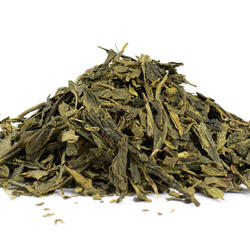
China Cooking Matcha – Green Tea


Matcha is the kind of green energy that can get you through the most intense of days, but make sure to stock this fine tealeaf powder for your kitchen, too. The cooking variety of this classic green tea is perfect for doughs, creams, even drinks: it adds a beautiful color and a whole range of nutrients. Start with a teaspoon in your smoothie or porridge, or make homemade matcha latte… Henan matcha will quickly become your favorite.
Shipping methods
| Nizozemská pošta HD - zásilkovna | Delivered by 8. 10. | 1,00 € |
|---|---|---|
 DHL DHL |
Delivered by 8. 10. | 4,90 € |


Ingredients
100 % China Matcha green teaBrew & Taste
China Cooking Matcha has a very mild taste, subtly sweet and without grit. The impression is smooth, with a comprehensive “green” note reminiscent of young tea leaves and vegetable freshness. And yet it’s not astringent. This velvety texture is exactly why it works so well in recipes: in milk beverages, it brings out the creaminess; in desserts, it underlines notes of vanilla, chocolate, and coconut; it can even work well in savory dishes.
Origins

The Henan region is located in central China and you can easily find it on a map. What’s much more interesting is the fact that it borders the northernmost tea-growing regions, and it is precisely this border location that gives the tea a different dynamic than the teas from the southern provinces.
The important tea-growing areas of Henan are linked to mountain ranges and their foothills, typically in the area around the Dabie Mountains with frequent fog and higher humidity, where mountain ridges alternate with forested valleys. These conditions slow down the growth of camellias, also known as tea plants (Camellia sinensis), giving the leaves enough time to mature and, in combination with the altitude, resulting in a more delicate aromatic impression of the tea. Selected Henan tea plantations are located at altitudes of 500-800 meters above sea level, with a humid microclimate, frequent clouds, and significant differences between day and night. This is a perfect environment for the delicate and aromatically pure leaves.
Now for the most important thing: the quality of matcha tea does not depend solely on where it was grown. The processing technology used after harvesting also has an extremely large influence on the result. In the case of China Cooking Matcha, it all starts with ""green storage"", during which the fresh leaves are either processed immediately after picking or stored for a short time in a clean, cool, and ventilated area without direct sunlight. This prevents them from overheating and turning brown. Once the leaves have rested, they’re trimmed to a uniform size, as uniformity of the raw material is essential for matcha. It affects both the evenness of the heat treatment and the resulting fineness and purity of the powder.
The key point in the production process is the rapid contact of the tea with steam (90–100°C for several seconds). This almost immediately stops the enzymatic processes and preserves the chlorophyll, i.e., the ""greenness"" of the color and the fresh character. Immediately afterwards, however, the leaves are cooled in a cooling net (for a few minutes) to quickly calm and dehumidify them and distribute the water in the stems and leaves evenly. The leaves should be soft to the touch and not overdried on the surface.
Finally, the tea needs to be dried gradually and in a controlled manner. The water evaporates from it in 20-25 minutes. This is followed by the separation of the stems and leaves, which would make the matcha coarse and give it a poorer color. This is followed by further drying (70-90 °C) to a very low moisture content of less than 5%. It is at this precise moment that the tea's stability, so important for storage and use in the kitchen, is established. Only after this ""base"" has been prepared does the process continue with sifting, inspection (including metal detection), and final grinding of the tea into a fine powder.
Benefits of ingredients:

Tea packaging preview
We pack our teas in a strong, zip-lock aluminum packet which allows you to easily re-seal its contents. This container protects the quality of the tea against humidity, light or foreign odors, all of which could noticeably affect the quality of the brew.
Preparation
 70-80 °C
|
 whisk
whisk
|
 0.5 teaspoon for 100 ml
|
Instructions for preparation
- Add half a teaspoon of matcha per 100ml of boiled water (75°C).
- For best results, heat up your glass or bowl before adding matcha powder.
- Whisk or stir vigorously until a thick foam forms.
- Optionally, use a milk frother.


Are you looking for inspiration? Other customers have bought this:
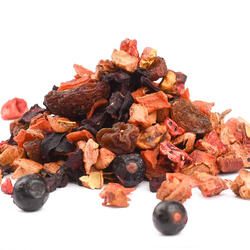
Child's Dream – Fruit Infusion
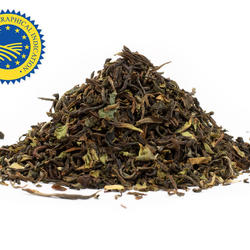
Darjeeling Earl Grey – Black Tea