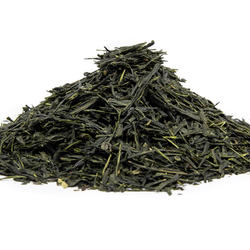
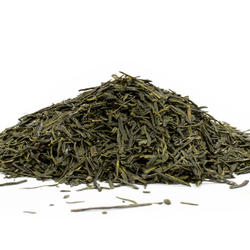
Japan Gyokuro Asahi - green tea


Rare gyokuro from Kagoshima Province will captivate you with a smooth taste full of unparalleled umami. It is light, delicate and refined. Connoisseurs call it the most beautiful dewdrop because it recalls the splendour of wild forests and the scent of a fresh morning. The word Asahi in the name refers to a special cultivar of tea trees that grew shaded to impart a unique aroma and wonderful flavor to their leaves.
Shipping methods
| Nizozemská pošta HD - zásilkovna | Delivered by 22. 10. | 1,00 € |
|---|---|---|
 DHL DHL |
Delivered by 22. 10. | 4,90 € |


Ingredients
100 % Green tea Japan Gyokuro AsahiThe infusion and taste of tea
Japan Gyokuro Asahi is characterized by a delicate, smooth taste crowned with irresistible umami. It is a tea that leaves a long and truly beautiful impression. The infusion has a light, yellow-green color.
Origin of tea

The Kagoshima Prefecture is located on the southwestern tip of the Japanese island of Kyushu. Its climate is subtropical and humid, with mild and relatively dry winters and hot and humid summers. Tea trees are said to have been planted in the area by a priest around 1319. Later, tea gardens were planted mainly in the hills, amongst rice paddies. In the 19th century, green tea production increased so much that farmers set up an organisation to improve the quality of the teas. At that time, the reputation of Kagoshima tea was poor. Around the middle of the 19th century, attempts were made to grow tea for English tea blends, but these were not successful and were abandoned by the farmers after a time.
It was not until the late 19th century that Kagoshima's tea business began to flourish, and it went from being an initially unknown producer to one of the world's top regional tea brands. Today it is the second most sought-after tea destination after Shizuoka, producing teas that are appreciated both in Japan and beyond. Of course, the fertile volcanic soil and excellent climatic conditions play a part in this, but this tea cannot do without the human hand and long-term treatment.
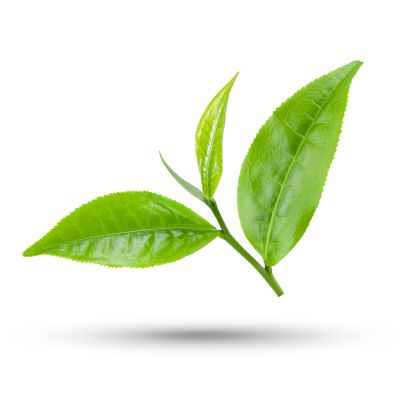
One of the steps farmers take to extract leaves of excellent aroma and great taste from Chinese tea trees (Camellia sinensis) is by planting a specialised cultivar, Camellia sinensis Asahi. In fact, it is perfectly suited to the production of gyokuro. The next important step is related to the way the tea bushes are cultivated - about 20 days before harvesting, workers cover them with mats to protect the tea from the sun. This increases the content of the amino acid theanine and the alkaloid theine in the leaves, making the tea taste sweet with a distinct umami.
We brought this Japan Gyokuro Asahi from the Shibushi location, where tea trees have been grown since 1726. The tea gardens there are currently being tended by a third generation of farmers, and by all accounts they are growing, processing and producing some of Japan's finest gyokuro. You can see for yourself what the tea, called Pearl Dew or The Most Beautiful Dewdrop, tastes like.
Benefits of ingredients:

Tea packaging preview
We pack our teas in a strong, zip-lock aluminum packet which allows you to easily re-seal its contents. This container protects the quality of the tea against humidity, light or foreign odors, all of which could noticeably affect the quality of the brew.
Preparation
 60 °C
60 °C
|
 2 minutes
|
 3g per 100 ml
|
Instructions for preparation
First infusion:
Pour 100ml of boiled water (60°C) per 3g of tea.
Covered, steep for 2 minues, then remove the strainer.
Second infusion:
Pour required amount of boiled water (70°C) over tea leaves.
Steep for 1.5 minutes.
Third infusion:
Pour required amount of boiled water (80°C) over tea leaves.
Steep for 1 minute.


Are you looking for inspiration? Other customers have bought this:
Japan Gyokuro – Green Tea
Japan Gyokuro Hisui – Organic Green Tea