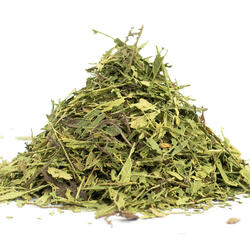
Why our products?
- Free shipping on orders over 49 €
- Satisfied customers
- Delivery date is specified within the product description
Benefits of Stevia
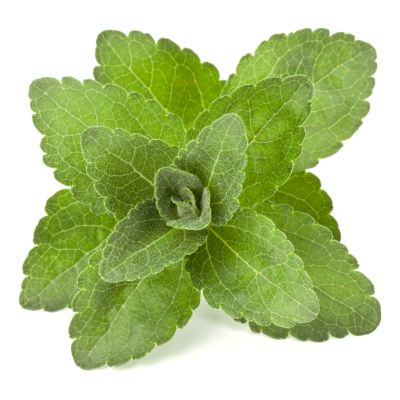
A thousand years ago, the Guaraní tribe in the Paraguayan mountains had an issue. Their traditional drink, maté, tasted too bitter, and they needed to remedy that. Sugar wasn't familiar to them and honey was too hard to come across, so they began experimenting with local plants. One day, they found an incospicuous green herb, and their problem was solved.
All they needed were a few leaves from this plant and maté became the most delicious drink. Natives called this plant 'ka'a he'ê', or 'sweet grass'. Europeans came across stevia in the 19th century, when it was described by the Swiss botanist Moisés Santiago Bertoni. But how is it possible for a plant to be sweeter than sugar and have near to no calories? Chemists set out to answer this question, and in the 1930s finally found their answer. They identified steviol glycosides, especially stevisoid and rebauadioside, which can be 300 times as sweet as sugar. Their molecular structure, however, is so specific that the human digestive enzymes can't dissolve them. They move on as waste, in their original molecular form.
Stevia grows up to 50 cm and has silky green leaves ending in clusters of tiny white flowers. It's a part of the Astraceae family, so it's related, for example, to sunflowers or chamomile. It spread from its orirginal habitat of Paraguayan and Brazilian highlands to every continent and the formerly annual plant was bred into becoming an evergreen plant, which makes it much easier for farmers to keep.
The first people to adopt stevia were the Japanese, who implemented it in the food industry in the 1970s. Nowadays, they add it to Coca-Cola, chewing gums, and even toothpaste. The western world was considerably more careful. Europe and America focused on research for 40 years to make sure it really is safe to use before adopting it in 2011.
Paraguayan gradmas are the first to convice people that stevia is an amazing kitchen addition. Sugarcane needs large amounts of water and chemicals while stevia grows almost independently. It can thrive in poorer soil, resists droughts, and doesn't need chemical sprays. One plant can yield up to 0.5 kg of dried leaves. Even you can grow it if you manage to find seeds or cut leaves. If you do, harvest the leaves shortly before they bloom, that's when they're at their sweetest.