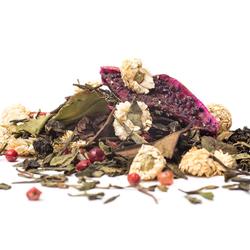
Harmony of Body & Soul - Gift Tea Tin 150g


This harmonious blend of green tea, mango, and blueberries will instantly take you to a summer garden full of ripe fruit and birdsong. Relax, sit back and savor every sip of this delicious treat. You can replenish energy, brighten up your day, and focus your mind on the tasks ahead.
Shipping methods
| Nizozemská pošta HD - zásilkovna | Delivered by 8. 10. | 1,00 € |
|---|---|---|
 DHL DHL |
Delivered by 8. 10. | 4,90 € |
Ingredients
Green tea Sencha, 25 % Candied mango (mango, sugar), 5 % Blueberries, Natural aroma, CornflowerBrew & Taste
Mango-Blueberry green tea lives up to its name. It tastes just like biting into a big piece of tropical juicy fruit topped with forest berries. Add the pleasant freshness of the tea leaves and you have a drink suitable for all-day (and all-year) enjoyment. Its infusion is a bright, yellow color and the aroma is fruity and lovely.
Origins
Having information about where your tea comes from is good for several reasons. One may be to satisfy simple curiosity, the other to avoid low-quality ingredients. So we won't keep anything from you.
Sencha is originally a Japanese tea, but Chinese sencha is also very good. Characterized by its flat, matt leaves, it is a traditional and extremely popular tea. Both for its delicate, unobtrusive flavor and aroma, and for its polyphenol content, which help to maintain mental and physical well-being. Let's add that green teas also contain small amounts of caffeine, so they are mildly stimulating, beneficial for cognitive function and sharpening the senses.
How is sencha actually made? The whole process starts in the tea plantation, where the leaves of the Chinese tea plant (Camellia sinensis) need to be picked (usually by hand) and then allowed to wilt briefly. Unlike traditional Chinese teas, this is followed by steaming, not pan-firing. The short and repeated exposure to high temperature stops the oxidation of the enzymes and preserves the natural aroma in the leaves. Finally, the leaves need to be shaped by folding, dried, sorted and packed.
Fruit is a great match for green tea. This time we've reached for mango, the sweet fruit of the tropical mango tree. Its original habitat is thought to be Southeast Asia, and surprisingly, mango trees have apparently been on Earth for 25 or even 30 million years. The fruit, as we know it today, is oval, fleshy, with an inedible seed in the centre. The juicy flesh is rich in the B vitamins, vitamin C, A and E, as well as carotene, potassium and magnesium.
From a completely different region come blueberries, the fruit of the low blueberry shrub. It's common around Europe, but we can also come across it in Iceland or northern Mongolia. The blue round fruits are harvested for their wonderful, sweet taste and great health benefits. They contain antioxidants, carotenoids, vitamin C, B vitamins, manganese, potassium, iron and other important minerals.

| Energy value: | 8 kJ / 2 kcal |
| Fats: | 0,5 g |
| of which saturated: | 0,1 g |
| Carbohydrates: | 0,5 g |
| of which sugars: | 0,4 g |
| Proteins: | 0,5 g |
| Salt: | 0,01 g |

Are you looking for inspiration? Other customers have bought this:
Happy Buddha – Green Tea
Pu Erh Super Organic