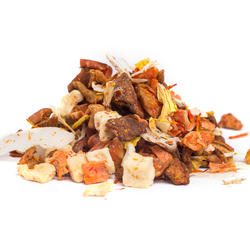
Golden Pear – Fruit Infusion


The foundation of every European garden – apples, pears, carrots, and sea buckthorn. If you combine them, you'll get a beverage with rich, sweet aroma and irresistible flavor. It's fresh, light and suitable for both hot and cold days. Golden Pear fruit tea also contains vital vitamins and minerals. Still not convinced? It's so sweet you won't even think about sugar!
Shipping methods
| Nizozemská pošta HD - zásilkovna | Delivered by 22. 10. | 1,00 € |
|---|---|---|
 DHL DHL |
Delivered by 22. 10. | 4,90 € |


Ingredients
20 % Pear chunks, Apple chunks, Raisins, Sea buckthorn, Orange peel, Carrot chunks, Lemongrass, Safflower, Aroma, Malic acidBrew & Taste
Golden Pear Fruit Tea has a light yellow color. The flavor is full of sweet and juicy pears along with refreshing apples with lemongrass. A light exotic tone is provided by orange peel.
Origins
This tea couldn't be called anything but "Pear". It's full of the aroma and taste of pears (Pyrus communis), so let's take a closer look at them.
Pear trees are deciduous trees of the rose family, native to Eurasia. Historically, pears were cultivated mainly in France and Belgium, but today there are about 2,500 varieties worldwide.
Depending on when they ripen, pears are divided into summer, autumn and winter varieties. Summer varieties tend to be less durable, while winter varieties last the longest. Pears also vary in color – they can be green, yellow or sometimes have a reddish tinge. In terms of shape, they can be compared to apples but are usually more elongated.
Pears contain less vitamin C but are rich in B vitamins (especially under the skin). They also contain fiber, which aids digestion.
When it comes to consumption, pears are popular raw, but they can also be dried and used to make juices, jellies, purees and more. Pears are also popular among lovers of alcoholic beverages, such as the traditional pear brandy or perry, a fermented drink similar to cider.
The other notable ingredient in Golden Pear fruit tea is the safflower (Carthamus tinctorius), known as Turkish saffron. It's an annual plant of the Astraceae family, native to Asia. Today, it is cultivated by farmers in the warm and dry regions of northwest India, California, Kazakhstan and Ethiopia.
Safflower grows to a height of 50-110cm and has orange to red flowers. Its seeds contain 45-55% oil similar to sunflower oil, which is used in the food industry. Safflower oil is rich in linoleic acid and is also used in cosmetics such as face creams and masks.
Tea packaging preview
We pack our teas in a strong, zip-lock aluminum packet which allows you to easily re-seal its contents. This container protects the quality of the tea against humidity, light or foreign odors, all of which could noticeably affect the quality of the brew.
Preparation
 100 °C
|
 8-10 minutes
|
 1 teaspoon for 150-200 ml
|
Instructions for preparation
Pour 150-200ml of boiling water (100°C) per 1 teaspoon of tea.
When brewing in a teapot add 1 extra teaspoon.
Covered, let steep for 8-10 minutes, then remove the strainer.


| Energy value: | 10 kJ / 2 kcal |
| Fats: | 0.5 g |
| of which saturated: | 0.1 g |
| Carbohydrates: | 0.6 g |
| of which sugars: | 0.6 g |
| Proteins: | 0.5 g |
| Salt: | 0.01 g |
Are you looking for inspiration? Other customers have bought this:
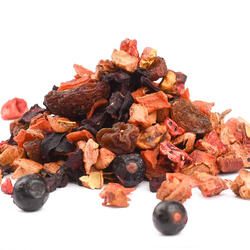
Child's Dream – Fruit Infusion
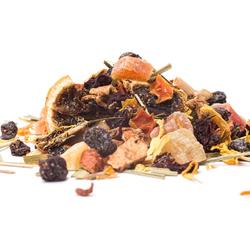
Subtle Limes – Fruit Infusion