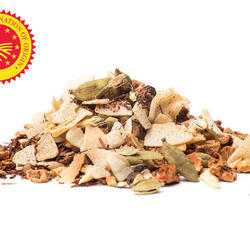
Festive Moments – Rooibos


A festive moment is a moment you want to enjoy from the first minute to the last. It's sweet, smells like honey and pleasantly warms you up. Just like the tea of the same name, based on delicate rooibos, apples, cinnamon and cardamom. You'll love the warm, smooth flavor accentuated by a lovely peppery note from the very first sip. Treat yourself to precious moments with your loved ones and delight in a cup of hot honey-cream tea.
Shipping methods
| Nizozemská pošta HD - zásilkovna | Delivered by 22. 10. | 1,00 € |
|---|---|---|
 DHL DHL |
Delivered by 22. 10. | 4,90 € |


Ingredients
51 % Rooibos, Roasted apple chunks, Ceylon cinnamon chunks, Cardamom, Natural aroma, Pot marigold petals, White Cornflower petalsBrew & Taste
Festive Moments tea has a dark mahogany color and a very pleasant, honey-sweet aroma when brewed. The flavor has a creamy smoothness combined with the freshness of roasted apples and crowned with a cinnamon finish. The resulting composition is extremely harmonious and since this blend doesn't contain any tea leaves, it's free of any bitterness.
Origins
The only place in the world where rooibos grows is the Cederberg. The mountains in the south-west of South Africa are covered with coniferous cedar-like trees.
In addition to these, visitors are also captivated by the distinctive rock formations, some of which are decorated with paintings by the aboriginal inhabitants, the bushmen. It was them who supposedly "discovered" the rooibos. They harvested the leaves and twigs of the shrub with the botanical name Aspalathus linearis and prepared very tasty herbal decoctions from them. In 1772, the botanist Carl Thunberg was intrigued by their actions and brought the custom to the families of Cape Dutch settlers. Two centuries later, Benjamin Ginsberg, the son of a Russian immigrant tea merchant, entered the history of rooibos and began to market it as 'herbal mountain tea'. There were many people interested in the secret uses of the Redbush tea, as rooibos is also called. Farmers explored its intriguing reproduction process (the seeds, whose germination is aided by fire, are spread by ants), and baristas made the world's first espresso tea from it. You can still order a so-called red cappuccino in South African coffee shops today.
Why is there so much fuss about rooibos? Apart from its delicious taste, it impresses its consumers with its high content of antioxidants, vitamin C and minerals such as sodium, potassium and calcium. But what it does not contain is caffeine, which is why it's loved by small children and is suitable for all ages and perhaps all situations. Rooibos is enjoyed by active athletes, students preparing for exams, nursing mothers and seniors. Let's mention how rooibos is actually harvested and processed.
The twigs with needle-like leaves need to be cut and transported to special production lines in the Cederberg hills. The material is chopped into small pieces, piled into heaps by workers and left to ferment. Once the rooibos starts to develop aroma and change color from green to mahogany brown, the fermentation is complete. The next step is direct drying under the South African sun, sorting and packaging.
Benefits of ingredients:
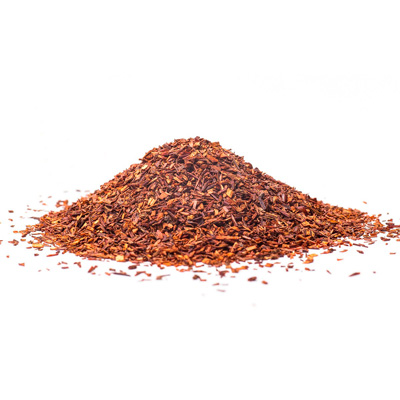

Tea packaging preview
We pack our teas in a strong, zip-lock aluminum packet which allows you to easily re-seal its contents. This container protects the quality of the tea against humidity, light or foreign odors, all of which could noticeably affect the quality of the brew.
Preparation
 100 °C
|
 8 minutes
|
 1 teaspoon for 150-200 ml
|
Instructions for preparation
Pour 150-200ml of boiled water (100°C) per 1 teaspoon of tea.
When brewing in a teapot add 1 extra teaspoon.
Covered, let steep for 8 minutes, then remove the strainer.


| Energy value: | 2 kJ / 0.4 kcal |
| Fats: | 0 g |
| of which saturated: | 0 g |
| Carbohydrates: | <0,5 g |
| of which sugars: | <0,5 g |
| Proteins: | 0 g |
| Salt: | 0 g |
Are you looking for inspiration? Other customers have bought this:
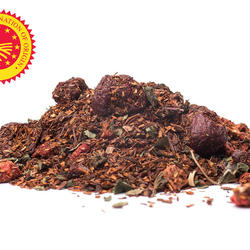
Aladdin – Tea Blend