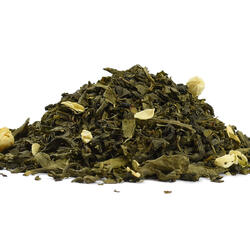
China Mao Jian Jasmine – Green Tea


Jasmine fragrance calms your mind, helps you meditate and rejuvenates the body. Jasmine tea does exactly the same, plus it's a nice pick-me-up. Taste the tea that brings joy – a blend of the finest green leaves from traditional Chinese gardens that's rich in fluffy, delicate tips. Fill your teapot with uniquely sweet, smooth, jasmine-scented tea. It will be a great companion for every day.
Shipping methods
| Nizozemská pošta HD - zásilkovna | Delivered by 22. 10. | 1,00 € |
|---|---|---|
 DHL DHL |
Delivered by 22. 10. | 4,90 € |


Ingredients
100 % Green tea China Mao JianBrew & Taste
China Mao Jian green tea with jasmine is fresh, delicate and really only slightly astringent. You can steep it repeatedly, and each time get a beverage with a slightly different taste, but you will always recognize jasmine flowers in it. The infusion has a yellow, light color.
Origins

The so-called scenting of green tea is very popular, especially in China, and has been used since time the ancient times. In addition to freshly picked jasmine blossoms, magnolia, roses and lotuses, for example, are added to teas. But what does the process actually look like? Nothing is done haphazardly, everything has its own order.
In the case of China Mao Jian tea with jasmine, let's start by imagining the old Chinese gardens located in several provinces south of the Yangtze or Yangzi River. The longest river in Asia and the third longest river in the world rises in the northern part of the Tibetan plateau and flows 6,300km into the East China Sea. If we were to float it to its mouth, we would pass the Chinese provinces of Yunnan, Guangxi, Jiangxi, Zhejiang and Fujian, among others, on the right bank. All of them are famous for producing extremely high-quality tea, especially green tea. And it is there that the leaves and fluffy tips were brought from.
The classic method of producing scented tea involves, of course, hand-picking and withering the leaves. Since green teas are usually harvested in spring and jasmine doesn't bloom until summer, the partially dried tea must be kept in a cool, dark place for several weeks. Once the jasmine flowers have bloomed, the buds need to be picked and mixed with the tea leaves. This is done in the evening, when workers pile the tea and flower mixture into heaps and ensure the temperature in the rooms is around 40⁰C. During this process, the jasmine flowers open and impart their wonderful fragrance to the tea.
The whole process is repeated up to 8 times. The flowers are then removed from the tea (as they are lighter than tea leaves, they can simply be fanned out), the tea is dried and sorted. Interestingly, Europeans, for example, find the presence of jasmine flowers in green tea attractive. The Chinese, on the other hand, see it as a sign of poor tea sorting.
Jasmine flowers are attributed aphrodisiac powers, are thought to induce peace of mind, and are used in meditation or to harmonize the body. Jasmine oils are among the rarest and most expensive in the world.
Benefits of ingredients:

Tea packaging preview
We pack our teas in a strong, zip-lock aluminum packet which allows you to easily re-seal its contents. This container protects the quality of the tea against humidity, light or foreign odors, all of which could noticeably affect the quality of the brew.
Preparation
 70-80 °C
|
 2-3 minutes
|
 0.5 teaspoon for 150-200 ml
|
Instructions for preparation
Pour 150-200ml of boiled water (70-80°C) per 1 teaspoon of tea.
When brewing in a teapot add 1 extra teaspoon.
Covered, let steep for 2-3 minutes, then remove the strainer.


Are you looking for inspiration? Other customers have bought this:
China Gunpowder – Green Tea
China Gunpowder Super – Green Tea