


Why our products?
- Free shipping on orders over 49 €
- Satisfied customers
- Delivery date is specified within the product description
Hojicha: A Tea you (may) have never heard of
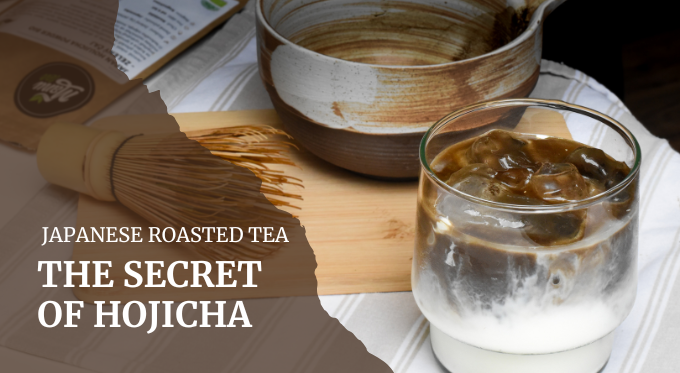
We're talking about green tea, but the color is more reminiscent of dark honey. Its aroma is similar to roasted nuts and caramel, there's no trace of astringency in the taste, and it leaves your palate feeling as if you'd just eaten a spoonful of baked treats. If you're thinking that this cannot be a green tea, believe us when we say: that's everyone's first reaction to hojicha.
If you're thinking about comparing hojicha to the famous matcha, the differences might be bigger than you'd expect:
| Attribute | Matcha | Hojicha |
| Form | Finely ground green tea | Roasted green tea |
| Color | Vibrant green | Amber to brown |
| Taste | Mellow, mildly sweet, umami | Mildly sweet, nutty, slightly smoky |
| Aroma | Grassy, fresh | Roasted, caramel-like |
| Caffeine content | High (cca 60–70 mg /cup) | Low (cca 10–15 mg / cup) |
| Energizing effect | Strong, lasting | Mild, more calming |
| Preferred time of day | Morning, early afternoon | Whenever during the day |
| Preparation method | Whisking the powder in water | Steeping or mixing the powder in water |
| Uses | Drinks, lattes, desserts | Drinks, lattes, desserts |
| Best for | Energy and focus | Peace and relaxation |
Hojicha (pronounced ho-JEE-cha) goes through a short, intense roasting over charcoal. This majorly influences its color, taste, and aroma, but still technically leaves its designation as a green tea intact. The leaves first undergo the traditional steaming, which stops oxidation. Only after that do they move over to the hot metal plates.
This process creates a beverage that combines the best of both worlds: it retains the benefits of green tea, but the taste and aroma is closer to a slightly baked oolong or a mild grain-based coffee.
The first sip will change the way you look at tea
If we were told to describe hojicha using only three words, it'd be smoothness, warmth, and nuttiness. The infusion is the exact opposite of what people associate with regular green tea. There's no astringency nor grassy brightness. Instead, you can look forward to a mild, pleasant sweetness with notes of roasted chestnuts, hazelnuts, and mild notes or caramel.
A lot of people think of hojicha as something between tea and coffee. The aroma is similar and it'll brighten up your day just like a cup of coffee. However, you won't experience any shakiness or heaviness in your stomach after you finish it. So if you're looking for something to replace your morning espresso, this is it.
What makes hojicha so unique
The motto of hojicha could be: "minimum caffeine, maximum pleasure". One cup of hojicha contains around 10–15 mg of caffeine. Regular green tea has around 25–35 mg and a cup of black coffee contains around 80–100 mg. During the roasting process, the majority of the caffeine content simply evaporates. That means you can indulge in hojicha after dinner or before bed without sacrificing the quality of your sleep.
Green tea contains the amino acid L-theanin. Research suggests that it can support the activity of alpha brain waves – the same ones your brain produces during meditation or deep concentration. A clinical study from 2019 found out that a regular intake of L-theanine during a period of four weeks led to an improvement in the quality of sleep and lowered subjective stressors in adult participants.
Roasting doesn't deplete the L-theanine content, so you can still enjoy its benefits.
How is hojicha actually made?
The base is always green tea, usually bancha (tea from later harvests) and sometimes sencha or kukicha, the latter of which mostly consists of twigs and stems of the camellia plant. After the harvest, the leaves are first steamed to stop oxidation and then gently rolled and placed on metal plates. Then comes the crucial part – the short and very intense roasting over charcoal.
The most crucial moment happens once you start hearing a silent cracking sound above the charcoal. For a couple dozen seconds, the tea is exposed to an intense heat and in that short moment, it transforms into something entirely different. Its green color fades into the warm hues of amber, the majority of the caffeine evaporates, and the astringent grassy notes are replaced by an aroma that's reminiscent of a freshly baked bread or roasted nuts
It's similar to watching dough rise into a golden croissant in the oven. Chemistry does its job and the result is like a flavorful spell.
From trash to a modern treasure
The year is 1920 and a merchant in Kyoto is sitting over a massive inventory of unsold green tea. The leaves are going stale, losing their freshness, and slowly making their way towards the trash. But this merchant wasn't going to give it up. He decided to try and quickly roast the old tea – and the result surprised even himself.
Instead of a dry, stale tea, he noticed an entirely new, captivating aroma from the pan. And the taste? Rounded, mild, and sweet. Something that was headed towards the waste heap suddenly became a new phenomenon all over Japan. The locals appreciated the mild and approachable character as well as the fact they could have it any time of the day. Since then, the basic method of preparation hasn't changed. It only improved.
Nowadays, hojicha is made out of various green tea varieties in various qualities, but roasting it over charcoal – which gives it its unmistakable character – remains unchanged.
How can hojicha surprise you?
Thanks to its distinct nutty and caramely notes, hojicha has a wide range of uses. The so-called hojicha latte is a hit in coffee shops not only in Japan but also in the rest of the world. What's more, it has a stable place in baking. The Japanese often add it to cakes, cookies, ice cream, or chocolate – the roasted character of hojicha complements it surprisingly well.
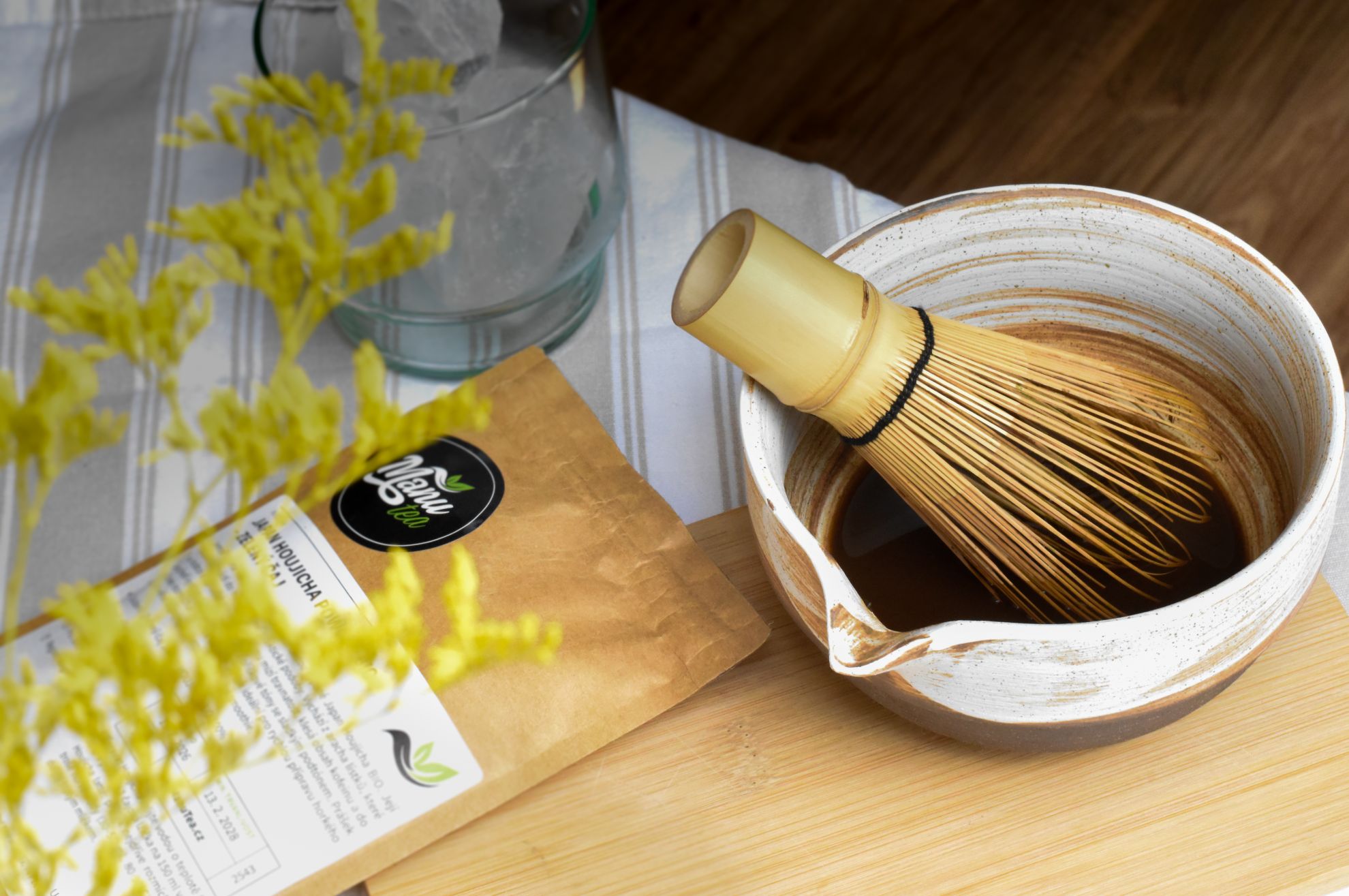
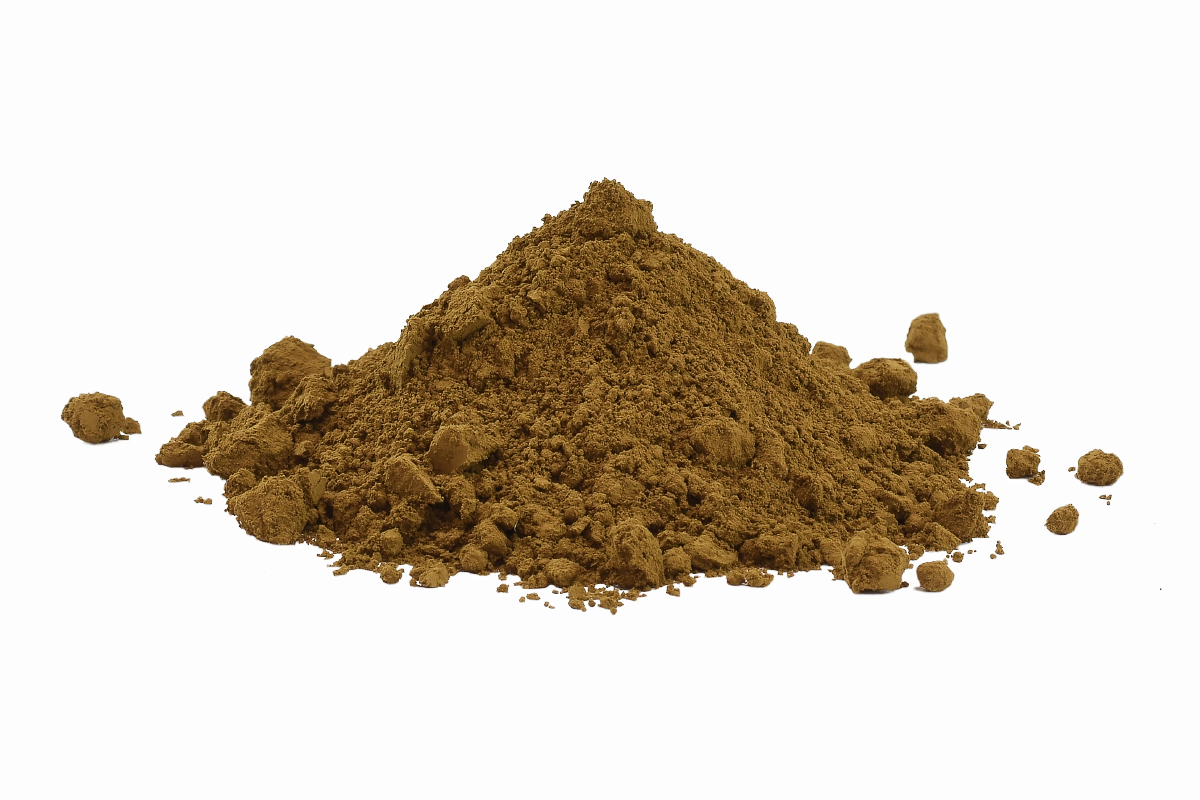
In ManuTea, we offer it in two different forms. You can choose the loose Organic Japan Hojicha from the Kagoshima region which comes in pure, ecological quality. But if you'd rather try homemade latte or other culinary experiments, try Organic Japan Hojicha Powder instead. It's a finely ground tea powder that's easy to dissolve in liquids.
How to prepare hojicha
Hojicha preparation is simple and forgiving of small mistakes. Unlike with milder green teas, you don't have to worry about burning it or steeping it for too long. The ideal water temperature is around 80–90°C and the steeping time is roughly 1–2 minutes. Loose hojicha should be brewed in a pot or a strainer while powdered hojicha can be simply mixed in water.
If you're interested in trying hojicha latte, mix a teaspoon of powdered hojicha in 30–50 ml of hot water, then add warm milk – doesn't matter if it's dairy, oat, or any other kind. Add a pinch of honey or agave syrup and suddenly you're holding a drink that will warm you up on cold days or cool you down in the summer if you make it on ice.
Have you already tried hojicha, or are you only just coming across it?
